
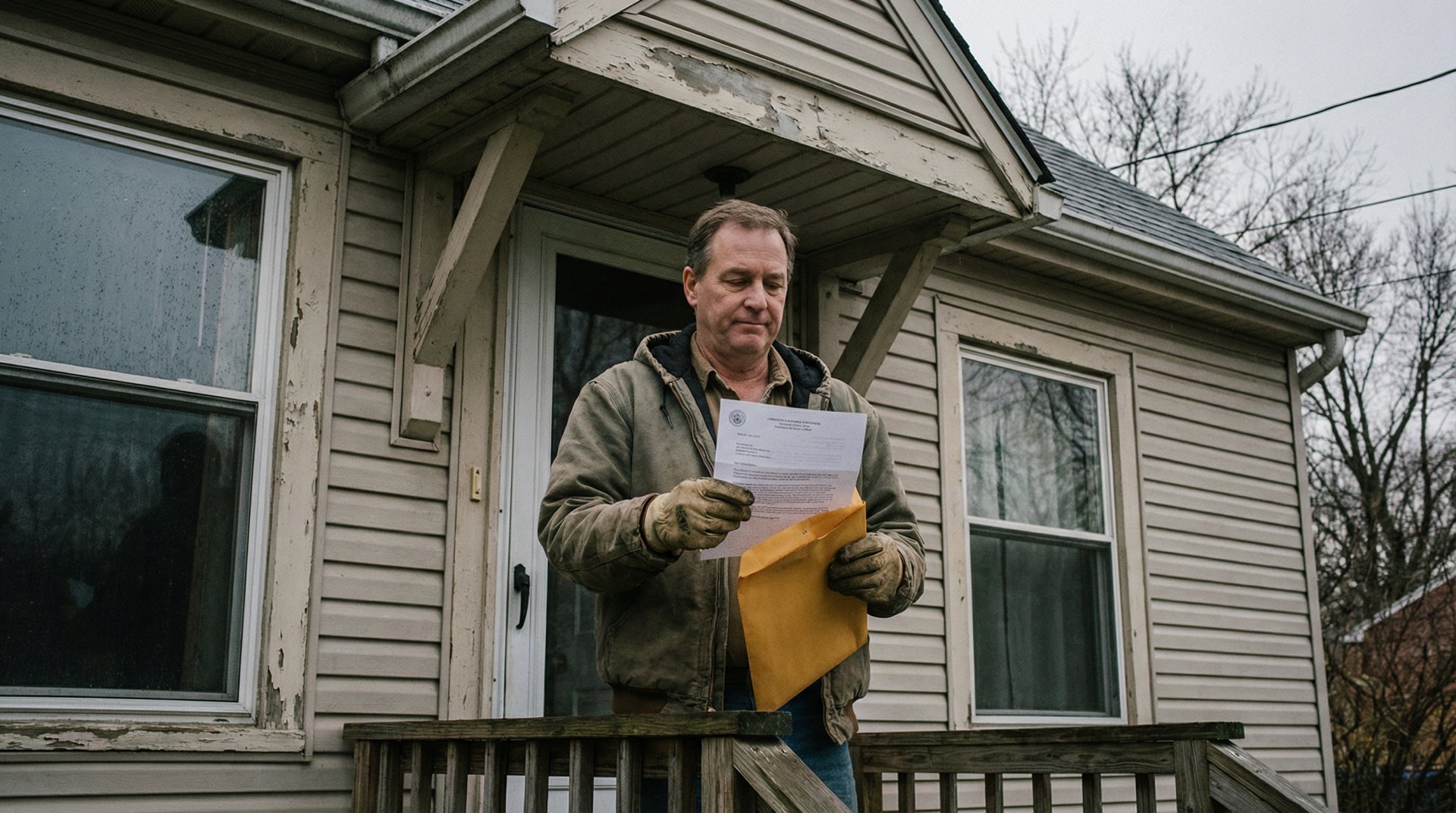
Home Insurance Canceled or Non-Renewed in Buffalo
The carrier dropped your property. Maybe it was the claims history, a failed inspection, a missed payment, or something the underwriter decided on renewal. Whatever the reason, selling a Buffalo home without active coverage is more complicated than most people realize — unless you go the cash route.
What’s Actually Happening
The Carrier Left. Now the House Is Uninsurable and Unsellable — to Most Buyers.
A cancellation or non-renewal notice from your insurance carrier doesn’t just mean you’re uninsured. It means the property has been flagged in a way that makes finding replacement coverage difficult — and it means anyone trying to buy with a mortgage is locked out, because lenders require a valid insurance binder before closing. If you can’t get coverage, the conventional buyer can’t close. It’s that simple.
In Western New York, non-renewal and cancellation situations tend to cluster around a few patterns: older properties with deferred maintenance that failed an insurer’s inspection, homes with claims histories that crossed a threshold, rental properties where the occupancy classification drifted from the original policy, and properties that sat vacant too long and triggered a vacancy clause. Any of these land you in the same place — uninsured, with a lender financing door that’s closed.
Under NY Insurance Law §3425, carriers are required to give written notice before cancellation or non-renewal — 15 to 45 days depending on the reason. That window is your opportunity to respond, find replacement coverage through the NY Fair Plan or a surplus lines carrier, or make a decision about the property. Most WNY homeowners in this situation don’t realize a cash sale is available at any point in that timeline — coverage status doesn’t affect our ability to close.
If your policy lapsed or was canceled specifically because of missed payments and the property now has force-placed coverage through your lender, the insurance lapse selling guide covers how that situation affects a sale — and why force-placed premiums make a fast cash sale more attractive than most homeowners initially expect.
If the carrier dropped you after too many claims and you’re now dealing with a CLUE report that’s blocking new coverage, the CLUE report guide explains how that seven-year claims history follows the address and what your options actually are. And if you’ve been quoted the NY Fair Plan and the premium is unaffordable, the high-risk insurance guide walks through what that market looks like in WNY.
Four Reasons Policies Get Canceled or Non-Renewed in Buffalo
WNY’s older housing stock and harsh climate give insurers more grounds to act than most homeowners realize — until the letter arrives.
Failed Inspection Finding
Carriers periodically inspect properties they insure — and in WNY, where most homes are 60–100 years old, those inspections frequently surface conditions that trigger non-renewal: aging roofs past useful life, knob-and-tube wiring, open permit violations, deteriorated porches, missing handrails. You may never have filed a claim. The property just didn’t pass the underwriter’s renewal criteria. See our roof age depreciation guide for how that finding plays out specifically on aging WNY roofing.
Claims History Threshold
Most insurers track claim frequency through the CLUE database — Comprehensive Loss Underwriting Exchange — which logs claims by property address for seven years. Two or three claims in that window, regardless of dollar amount, can put a Buffalo property into non-renewal territory even with a clean payment history. The property’s address carries that history, not just the current owner. A new buyer’s insurer pulls the same CLUE report and may decline coverage entirely on what they see.
Vacancy & Occupancy Change
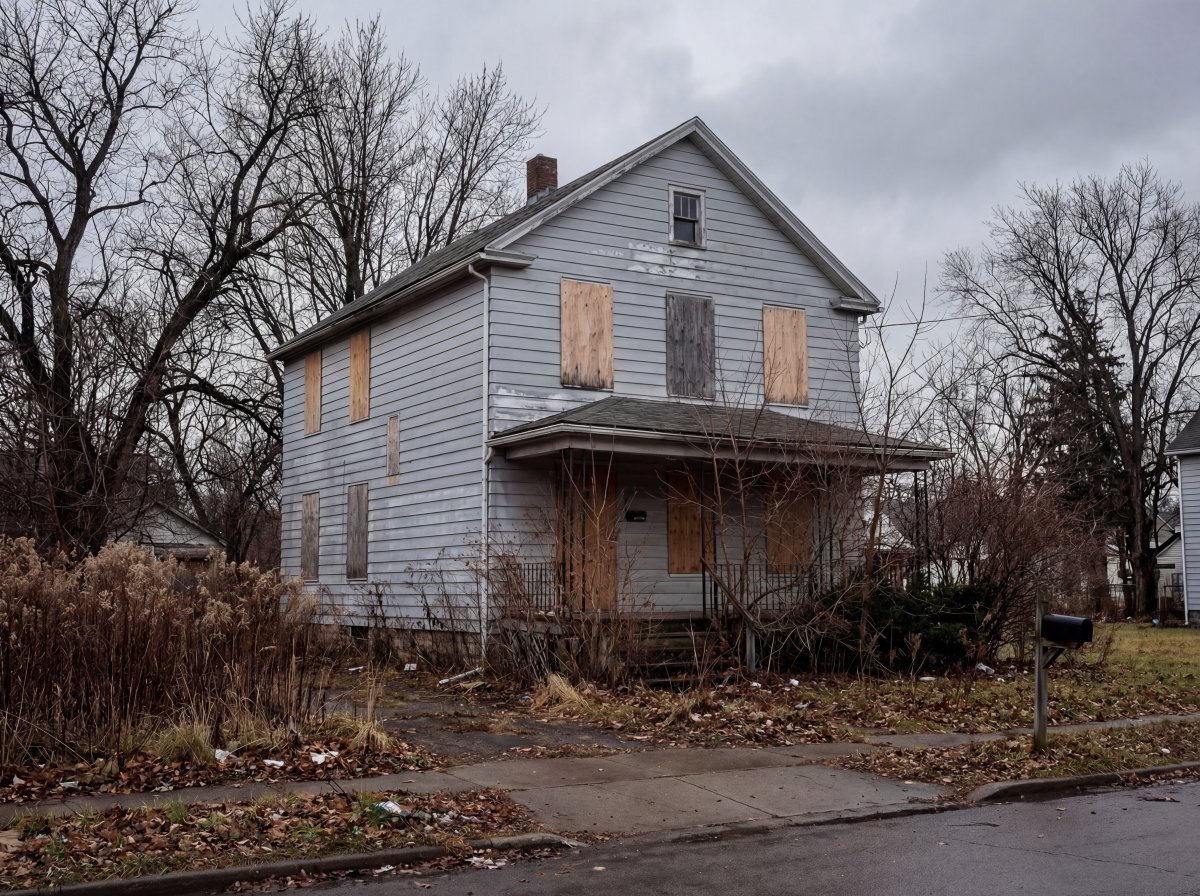
Standard homeowner’s policies include vacancy clauses that suspend or void coverage after 30–60 days of unoccupancy. A property left vacant after a death, a move, or a tenant departure can lose coverage without the owner realizing it — particularly on inherited properties sitting in probate, rental properties between tenants, or homes being prepped for sale. In Erie County, vacant property also triggers code enforcement attention, compounding the problem.
Non-Payment & Force-Placement
A lapsed premium triggers cancellation under most NY policies after a grace period. If you have a mortgage, your lender then purchases force-placed insurance on the property — typically at 2–4x the premium of a standard policy, with coverage that protects only the lender’s interest, not yours. Force-placed insurance is expensive, limited, and it signals to any future insurer that the property was uninsured. Getting back to standard coverage after force-placement in WNY is genuinely difficult.
 Non-Renewal Notice
 Vacant & Uninsured
 Cash Closing
Go Deeper
More on Canceled & Non-Renewed Policies in Buffalo
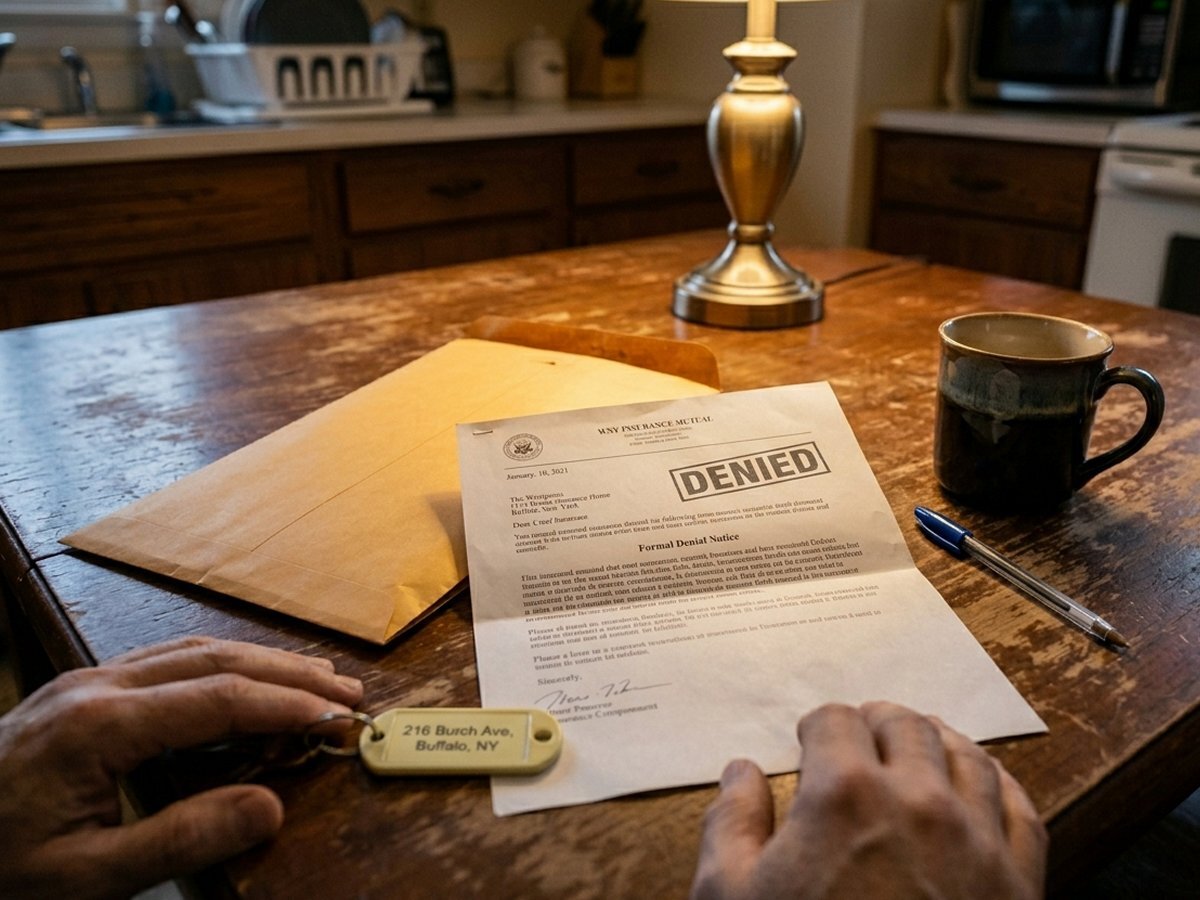
Non-Renewal Notice
NY §3425 notice requirements, your response timeline, and what options exist before coverage actually ends on a Buffalo property.
Read Guide →Sell Without Insurance
No active coverage doesn’t block a sale in NY — but it does block financed buyers. How a cash sale works when the policy is gone.
Read Guide →Insurance Lapse & Selling
Force-placed coverage, lender implications, and why a defined closing date ends the premium bleed on a set day.
Read Guide →High-Risk Home Insurance
NY Fair Plan, surplus lines market, and when the premium on a WNY property makes a cash sale the better financial decision.
Read Guide →Common Questions
Policy Canceled or Non-Renewed FAQ — Buffalo NY
Can I sell my Buffalo home if my homeowner’s insurance was canceled or non-renewed?
Yes — NY State does not require a seller to have active insurance as a condition of transferring property. The deed transfers at the Erie County Clerk’s office regardless of coverage status. The issue is with buyers: any buyer using mortgage financing needs an insurance binder before their lender will fund. If the property is currently uninsurable — because of its condition, claims history, or CLUE report — a financed buyer can’t close. Cash buyers have no lender requirement. We’ve closed on uninsured Buffalo properties in Cheektowaga, South Buffalo, and Riverside without coverage issues ever entering the transaction.
My insurance company sent a non-renewal notice. How much time do I have under New York law?
Under NY Insurance Law §3425, the required notice period depends on the reason for non-renewal and how long you’ve been insured. For policies in force less than three years, the insurer must give at least 45 days’ notice of non-renewal. For policies in force three years or more, non-renewal requires at least 45 days’ notice and the carrier must state specific reasons. Mid-term cancellations for non-payment require 15 days’ notice; cancellations for other reasons require 30 days. That window is the time to either find replacement coverage, respond to the insurer’s stated reasons, or make a decision about the property itself.
What is the NY Fair Plan and is it my only option after a non-renewal in Buffalo?
The New York Property Insurance Underwriting Association — commonly called the NY Fair Plan — is the insurer of last resort for properties that can’t get standard market coverage. It’s available to any eligible NY property but premiums run significantly higher than standard market rates and coverage is more limited. For a WNY homeowner who’s been non-renewed, the Fair Plan is often the bridge to keeping the property insured while pursuing a sale. The surplus lines market — non-admitted carriers that operate outside standard regulations — is another option for properties with unusual risk profiles. Neither is cheap. If the carrying cost of high-risk insurance makes holding the property financially painful, that’s relevant math when comparing to a cash sale.
My lender put force-placed insurance on my property after my policy lapsed. What does that mean?
Force-placed insurance, also called lender-placed insurance, is coverage your mortgage servicer purchases on your behalf when your policy lapses — and charges to your escrow account. It protects the lender’s interest in the property, not yours. It typically doesn’t cover your personal property, liability, or additional living expenses — just the structure, from the lender’s perspective. Premiums run 2–4x what standard coverage would cost. Getting back to voluntary coverage after force-placement requires addressing whatever caused the lapse — and the lender’s servicing department moves slowly. Many WNY homeowners in this situation find that selling ends the force-placed premium on a defined date, which a specific closing date at a title company locks in cleanly.
The insurer cited my roof as the reason for non-renewal. Do I have to replace it to get coverage?
Not necessarily — but it depends on what the insurer’s inspection found and what the surplus lines and Fair Plan markets will accept. A roof that was flagged as past useful life but isn’t actively leaking may be insurable through a surplus lines carrier at a higher premium with a roof exclusion rider. A roof with active damage or significant structural compromise may push you to the Fair Plan or make coverage cost-prohibitive. If a roof replacement is the stated condition for reinstatement and the cost is $12,000–$22,000 in current WNY contractor pricing, the math on spending that to restore insurability for a property you’re considering selling anyway often doesn’t work out. See our roof claim denial guide for more on how roof condition affects insurability in WNY.
How does a canceled policy affect the sale if I still have a mortgage on the Buffalo property?
Your mortgage servicer will know about the lapse almost immediately — your homeowner’s policy is typically required by the loan documents and the servicer monitors coverage. They’ll notify you of the lapse, give you a short window to restore coverage, and then force-place if you don’t. Once force-placed, the premium is added to your escrow and your monthly payment increases. You’re still free to sell the property — the mortgage gets paid off at closing from the sale proceeds, and the force-placed coverage ends on the closing date. Cash buyers can often close faster than the force-placed premium cycle compounds significantly.
Does NCB buy homes in Buffalo where the insurance has been canceled or never obtained?
Yes. Canceled coverage, lapsed policies, force-placed situations, inherited properties that were never insured under the new owner — all of these are situations we close through regularly in Erie and Niagara County. The property’s insurability status doesn’t factor into our process. We assess what’s standing, price the condition honestly, and close at a local Erie County title company. The absence of a current policy is your problem to solve only if you’re selling to a financed buyer. With us, it’s not a factor.
Related Insurance & Condition Guides
We Buy Uninsured & Hard-to-Insure Properties Throughout Western New York
Buffalo • Cheektowaga • Tonawanda • Amherst • Lackawanna • West Seneca • Hamburg • Lancaster • Depew • Kenmore • Lockport • Niagara Falls • North Tonawanda • Grand Island • Orchard Park • Sell As-Is in Buffalo
Nickel City Buyers — Buying Uninsured & Hard-to-Insure Homes in Buffalo & WNY Since 2013
Nickel City Buyers, LLC has been buying properties with canceled, lapsed, force-placed, and non-renewed insurance across Erie County and Niagara County since 2013. We are a local Buffalo LLC at 3842 Harlem Rd STE 400-339, Cheektowaga, NY 14215. (716) 557-7005. 300+ homes purchased. 32 five-star Google reviews. A+ BBB. Pre-war Riverside two-families, postwar Cheektowaga ranches with aging electrical, inherited South Buffalo properties sitting vacant in probate — coverage status has never stopped us from closing.
Coverage Status Is Not a Barrier to Selling
No obligation — a direct conversation about your uninsured or hard-to-insure Buffalo property and your options.