
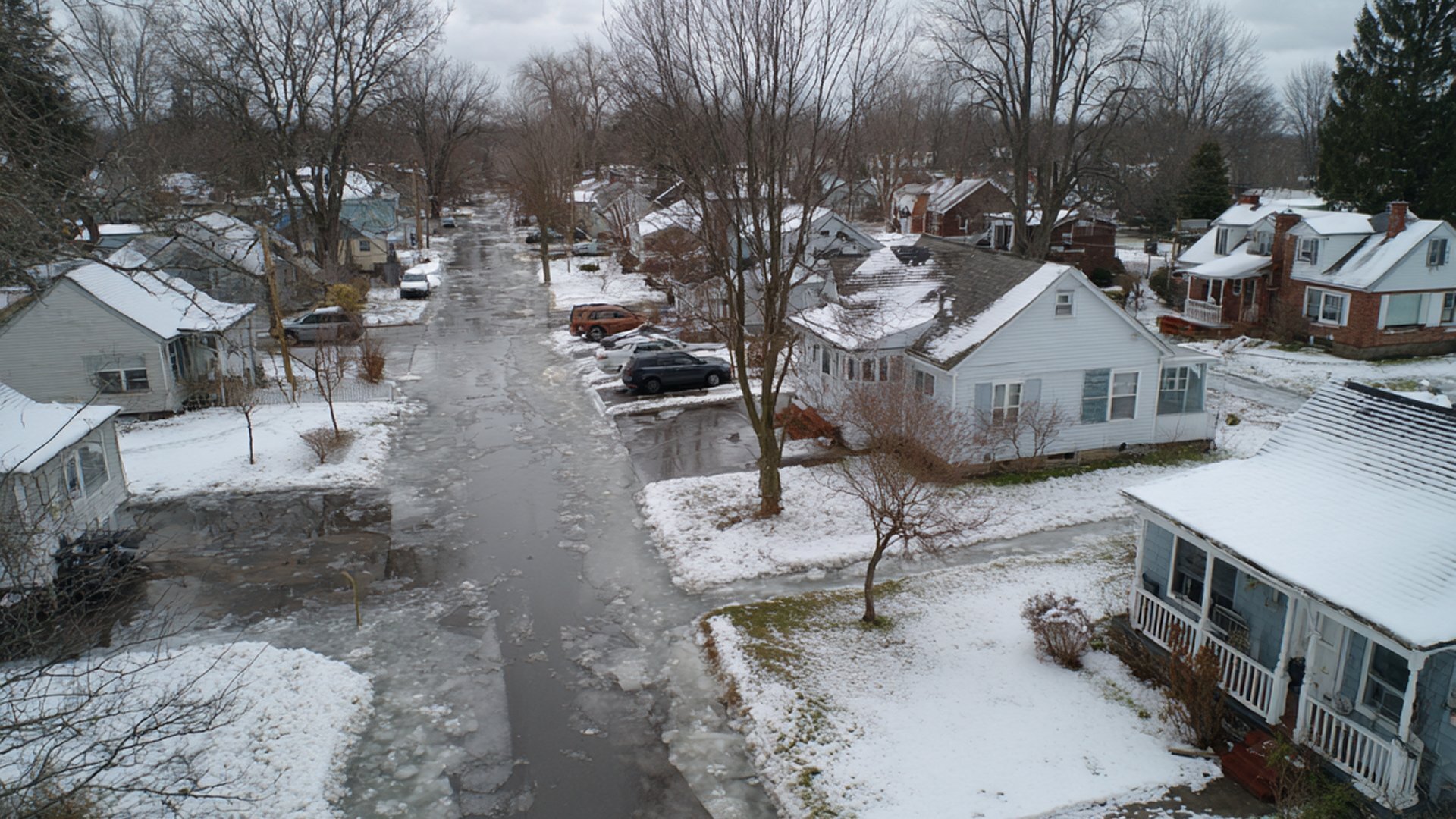
Selling a Home in a Buffalo NY Flood Zone
FEMA Zone AE designation means mandatory flood insurance for any buyer with a federally backed mortgage — and in Western New York, where Ellicott Creek, Cazenovia Creek, and Buffalo Creek drain neighborhoods across Erie County, more properties carry that designation than homeowners realize. Cash buyers bypass the requirement entirely.
What’s Actually Happening
The Flood Zone Designation Doesn’t Block a Sale. It Blocks a Financed Sale.
FEMA’s Special Flood Hazard Area maps designate portions of Erie County as Zone AE — meaning properties in that zone have a statistically significant annual flood risk. For homeowners trying to sell, the designation creates a specific problem: any buyer using a federally backed mortgage (FHA, VA, conventional Fannie/Freddie) is required to carry NFIP flood insurance as a condition of the loan. That insurance isn’t cheap — Risk Rating 2.0 has pushed NFIP premiums upward significantly on WNY properties — and it can knock out buyers who hadn’t budgeted for it.
The affected neighborhoods in WNY are well-known to anyone who’s spent time in Erie County: properties near Ellicott Creek in Tonawanda and Cheektowaga, Cazenovia Creek in West Seneca and South Buffalo, Buffalo Creek in West Seneca, and low-lying areas along the Niagara River and Lake Erie shoreline. Postwar aluminum-sided ranches and prewar clapboard two-families in these areas often carry Zone AE designations that homeowners only discover when they list the property or check the FEMA flood map.
A cash sale removes that entire layer. No lender means no flood insurance requirement. We’ve closed on Zone AE properties across Erie County without elevation certificates, without NFIP policies in place, and without requiring the seller to do anything about the designation before closing.
If you’re in Zone AE and wondering whether an elevation certificate could help reduce your buyer’s flood insurance cost enough to keep them in the deal, our elevation certificate guide explains when it’s worth getting one before listing and when it’s not. The short answer: if your first floor elevation is significantly above the Base Flood Elevation, a certificate can dramatically reduce NFIP premiums — sometimes enough to save a conventional sale.
If the flood zone has produced actual water damage or basement issues on the property, the situation intersects with our water damage insurance guide and basement water problems resource. Flood zone properties near Cazenovia Creek and Ellicott Creek deal with both the insurance designation and recurring structural moisture — those are separate problems that often need to be addressed together.
Four Ways Flood Zone Status Complicates a WNY Sale
Zone AE designation creates real transaction friction — not just for the seller, but for every conventional buyer who tries to close.
Mandatory NFIP Requirement
Federally backed lenders — FHA, VA, and conventional Fannie Mae/Freddie Mac loans — require flood insurance as a condition of closing on any property in a designated Special Flood Hazard Area. The buyer must have an active NFIP or private flood policy in place before the lender funds. Under FEMA’s Risk Rating 2.0 system, which replaced the old flood zone rate tables in 2021, premiums on WNY properties near Ellicott Creek and Cazenovia Creek have increased significantly — sometimes adding $2,000–$4,000 to a buyer’s annual carrying cost.
Buyer Sticker Shock at Disclosure
NY State requires sellers to disclose known flood zone status on the Property Condition Disclosure Statement. Many buyers — particularly first-time buyers looking at affordable WNY housing stock near creek corridors — encounter the flood insurance requirement for the first time during the transaction and aren’t prepared for it. Even when the buyer wants to proceed, their lender’s underwriter may pull back on the property or require additional documentation that delays or kills the closing.
Elevation Certificate Complications
To get an accurate NFIP quote, a buyer typically needs an Elevation Certificate showing the structure’s relationship to the Base Flood Elevation. Getting a certificate requires hiring a licensed surveyor in Erie County — typically $400–$800 — and waiting for scheduling. If the result shows the structure is below BFE, the NFIP premium can be substantial enough that it changes the buyer’s decision entirely. And if the certificate doesn’t exist, the buyer gets rated at the worst-case rate until one is obtained. See our elevation certificate guide for exactly how this plays out on WNY properties.
Compounding Water & Structure Issues
Properties in Zone AE near WNY creek corridors don’t just carry a map designation — they often carry the physical history of repeated flood exposure. Basement water intrusion, wet basement floors, foundation seepage, and sill plate rot from persistent ground moisture are common in homes near Ellicott Creek in Tonawanda and Cheektowaga, and along Cazenovia Creek in West Seneca. The flood zone status and the structural condition are connected — and both affect what a conventional buyer can do with the property.
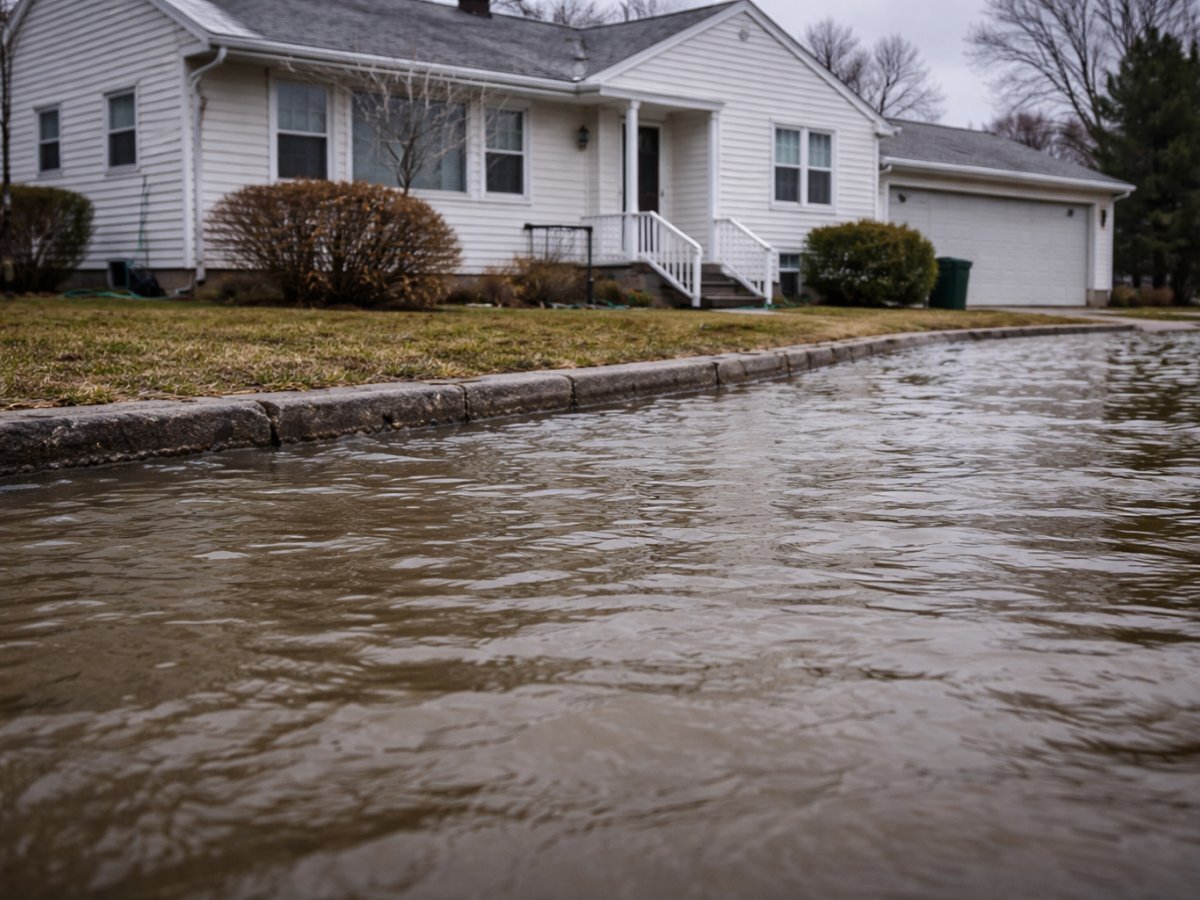 Zone AE Flooding
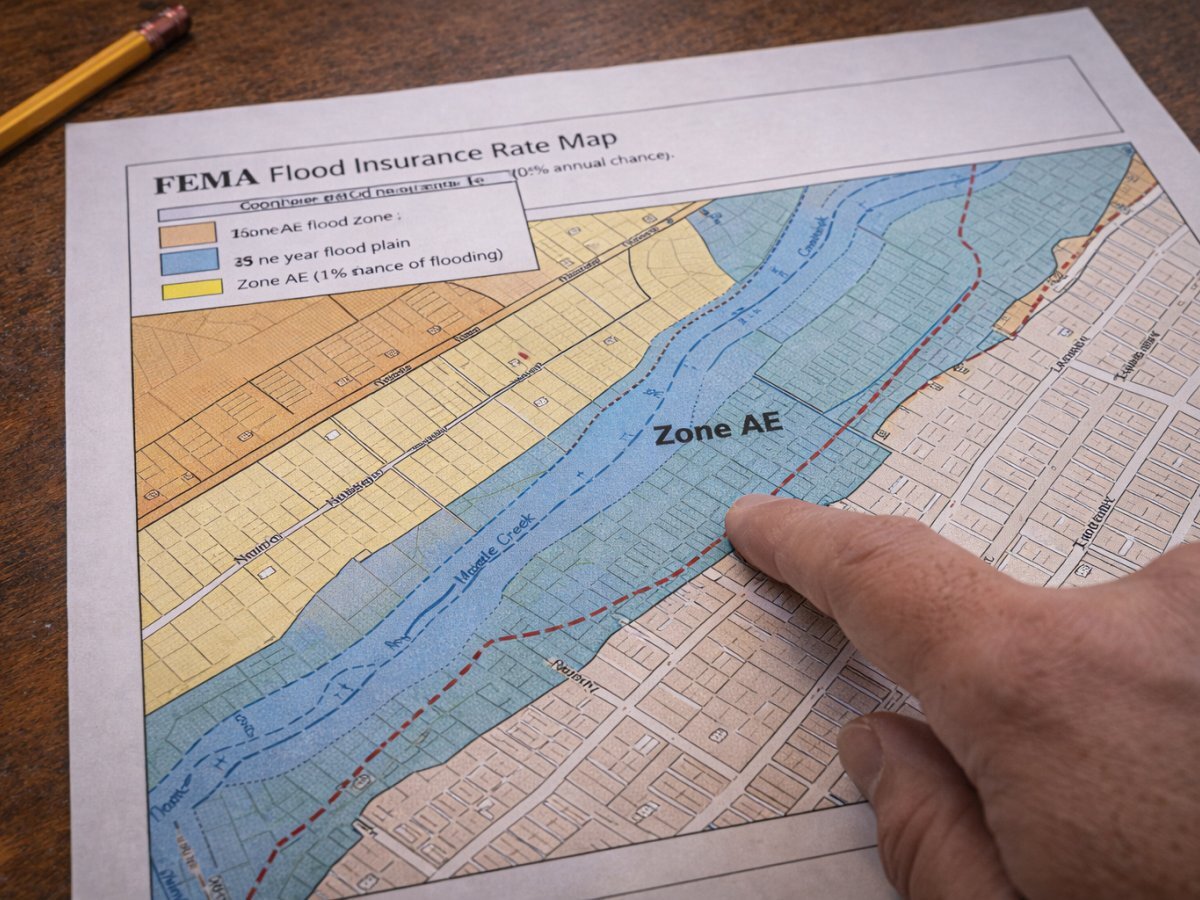 FEMA Flood Map
 Cash Closing
Go Deeper
More on Flood Zone Sales in Buffalo & WNY
FEMA Zone AE Selling
How Zone AE designation affects your WNY sale, what it means for your buyer’s costs, and why cash removes the entire insurance obstacle.
Read Guide →Flood Insurance Required to Sell
Why federally backed buyers must have NFIP coverage before their lender funds — and what happens when that requirement kills a deal.
Read Guide →Elevation Certificate
When to get one before listing, what it costs in Erie County, and how it affects NFIP premiums on Zone AE properties.
Read Guide →NFIP Flood Insurance
What NFIP covers on WNY Zone AE properties, how Risk Rating 2.0 changed premiums, and when private flood insurance beats the NFIP.
Read Guide →Common Questions
Flood Zone Selling FAQ — Buffalo NY
How do I find out if my Buffalo home is in a FEMA flood zone?
The fastest way is the FEMA Flood Map Service Center at msc.fema.gov — enter your address and it returns the current flood zone designation for your property. Erie County also maintains a GIS mapping tool at gis.erie.gov that overlays flood zone data on county parcel maps. Zone AE is the most common high-risk designation in WNY — it covers properties within creek and river floodplains, including significant portions of Tonawanda, Cheektowaga, West Seneca, and low-lying Buffalo neighborhoods. Zone X is considered minimal risk and carries no mandatory insurance requirement.
Can I sell my Buffalo home in Zone AE without flood insurance?
Yes — you as the seller are not required to carry flood insurance to transfer the property. The requirement falls on the buyer’s lender. If your buyer is using a federally backed mortgage, their lender will require an active NFIP or private flood policy before funding — that’s the buyer’s problem, not yours, except that it affects who can actually close. Cash buyers have no lender and no insurance requirement. We’ve purchased Zone AE properties in Tonawanda, Cheektowaga, and West Seneca without any flood policy in place at closing.
What is FEMA Risk Rating 2.0 and how did it change flood insurance costs in WNY?
FEMA implemented Risk Rating 2.0 in 2021 — a complete overhaul of how NFIP premiums are calculated. The old system used flood zone maps and elevation relative to Base Flood Elevation as the primary pricing factors. The new system uses a broader set of variables including distance to water, property characteristics, and replacement cost. For WNY properties near Ellicott Creek and Cazenovia Creek, the impact has been mixed — some properties saw premiums decrease, particularly those with higher first-floor elevations, while others saw significant increases. Properties that were grandfathered under the old rate tables lost that protection at renewal. The practical effect for WNY sellers is that buyers are now getting more accurate but often higher flood insurance quotes than they expected based on prior market experience.
Does flood zone designation need to be disclosed when selling in New York?
Yes. New York’s Property Condition Disclosure Statement includes a specific question about known flood zone status. Sellers who know the property is in a designated SFHA are required to disclose it. Failure to disclose is a separate legal issue from the transaction mechanics — but practically speaking, any buyer’s lender will discover the Zone AE status through their own flood determination during underwriting, so non-disclosure rarely remains hidden. The disclosure requirement applies regardless of whether you’re selling conventionally or to a cash buyer.
My Zone AE property has also had repeated basement flooding. Does that affect a cash sale?
The flood zone designation and the actual water history are two separate things, but they’re related — and both affect the offer. Zone AE properties near WNY creek corridors often have structural moisture issues: cove joint seepage, block foundation saturation, wet basement floors, and in severe cases sill plate rot from persistent ground moisture. We assess what’s actually there during walkthrough — the flood history, the visible water damage, the foundation condition. All of it factors into the offer honestly. The water damage doesn’t disqualify the property any more than the zone designation does. See our wet basement floor guide and basement water problems resource for what those conditions look like in WNY housing stock.
Is there any way to get my property removed from a FEMA flood zone?
Potentially — through a FEMA Letter of Map Amendment (LOMA) or Letter of Map Revision (LOMR). A LOMA can remove a specific property from a flood zone if a licensed surveyor can demonstrate the lowest adjacent grade is at or above the BFE. This requires an elevation certificate and a formal FEMA application, and the process takes months. It’s worth pursuing if the property was incorrectly mapped — common in WNY where some Zone AE boundaries sweep in properties that are actually elevated well above the floodplain. But if the designation is accurate and the property genuinely sits at or below BFE, a LOMA isn’t available. For most WNY sellers weighing the cost and time of a LOMA application against a direct cash sale, the comparison rarely favors the LOMA process.
Does NCB buy Zone AE flood zone properties throughout Western New York?
Yes — Zone AE properties are a regular part of our purchase activity in Erie County. We’ve bought along Ellicott Creek in Tonawanda and Cheektowaga, near Cazenovia Creek in West Seneca and South Buffalo, and in low-lying neighborhoods near the Niagara River in the northern part of the county. Flood zone designation doesn’t affect our process — no lender, no insurance requirement, no elevation certificate needed. The condition of the property and its history of flood exposure factor into the offer. The designation itself is not a disqualifier.
Related Insurance & Condition Guides
We Buy Zone AE Flood Zone Properties Throughout Western New York
Buffalo • Cheektowaga • Tonawanda • Amherst • Lackawanna • West Seneca • Hamburg • Lancaster • Depew • Kenmore • Lockport • Niagara Falls • North Tonawanda • Grand Island • Orchard Park • Sell As-Is in Buffalo
Nickel City Buyers — Buying Zone AE Flood Zone Homes in Buffalo & WNY Since 2013
Nickel City Buyers, LLC has been purchasing FEMA Zone AE flood zone properties across Erie County and Niagara County since 2013 — no flood insurance required, no elevation certificate needed, no lender. We are a local Buffalo LLC at 3842 Harlem Rd STE 400-339, Cheektowaga, NY 14215. (716) 557-7005. 300+ homes purchased. 32 five-star Google reviews. A+ BBB. Postwar ranches near Ellicott Creek in Tonawanda, prewar two-families near Cazenovia Creek in West Seneca, low-lying Cheektowaga properties on the creek corridors — flood zone designation has never stopped us from closing.
Flood Zone Designation Is Not a Barrier to a Cash Sale
No elevation certificate, no flood policy, no lender requirement — a direct conversation about your Zone AE property and your options in Buffalo.