
Insurance Adjuster Came In Too Low in Buffalo
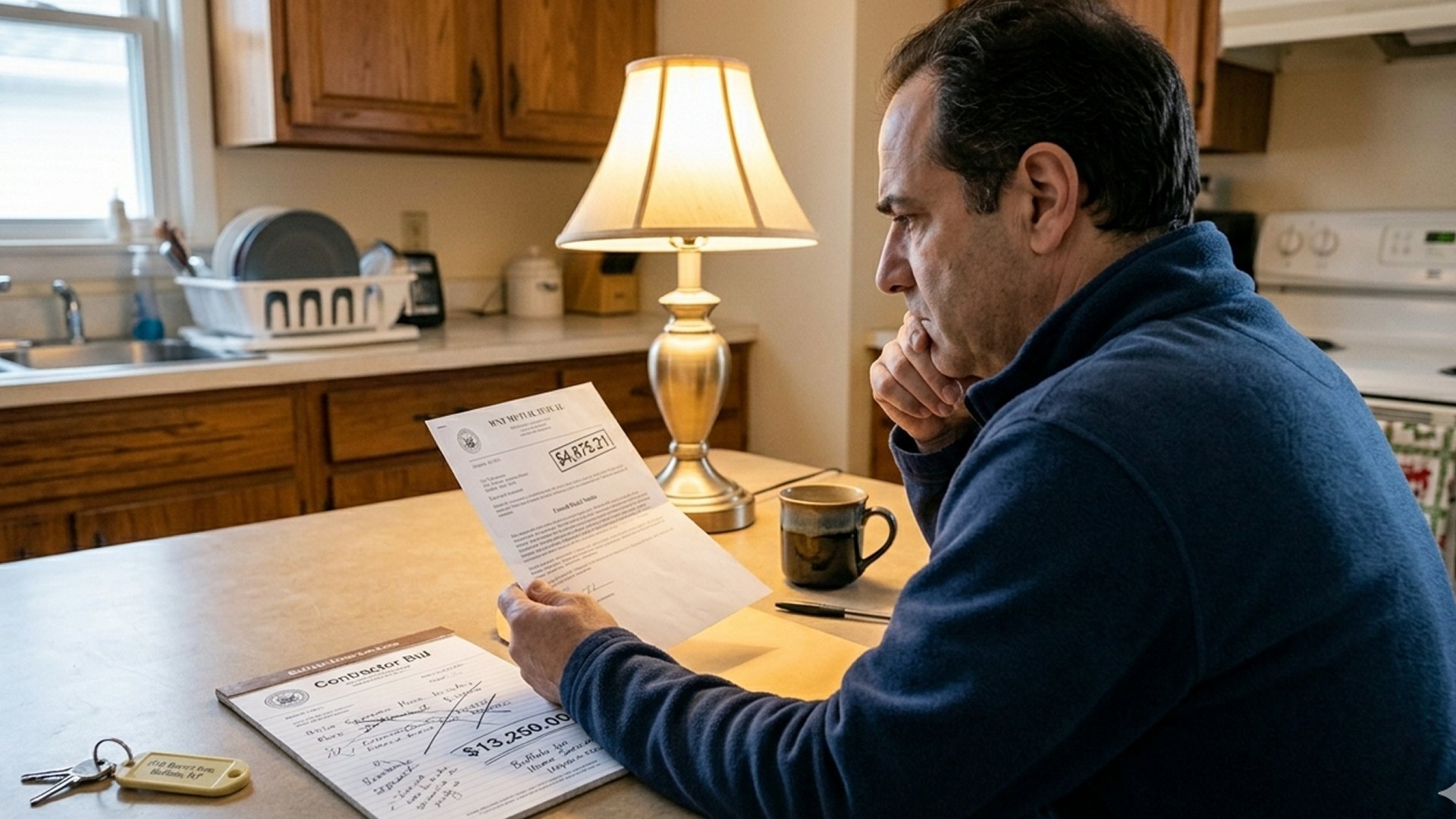
The adjuster walked through, wrote up a scope, and handed you a number that doesn’t cover what repairs actually cost in Western New York. You’re not stuck with that number — but you need to know how to challenge it.
They Lowballed You
The Adjuster’s Number and What Repairs Actually Cost in Buffalo Are Not the Same Number
You know what a contractor charges to work on a 1958 ranch in Cheektowaga. The adjuster’s software doesn’t. Insurers use Xactimate — a pricing database that pulls national and regional averages, updated periodically, and completely disconnected from what licensed contractors in Erie County are actually bidding right now. The result is a check that looks like a settlement but falls $10,000–$40,000 short of what it actually costs to fix your house.
The gap is widest exactly where WNY housing stock is most common: fire remediation on pre-1960 homes with plaster walls and knob-and-tube wiring, roof replacements on postwar ranches where the shingle profile doesn’t match anything in a national catalog, water damage jobs involving original hardwood flooring or 1950s-era tile. The adjuster may not be lying to you — but the software is optimized for national averages, not South Buffalo two-families. You’re left holding a check that doesn’t cover the work.
You’re Not Stuck With That Number
A low adjuster estimate is not a final number. Under your policy’s appraisal clause — present in virtually every NY homeowner’s policy — you have the right to demand a neutral appraisal of the loss when you and the insurer disagree on the amount. Each side selects a competent appraiser; those two select an umpire; any two of the three can set a binding number. A licensed public adjuster in Erie County can also review the Xactimate line items, document the actual contractor costs in your market, and submit a supplement claim with supporting bids. That process often recovers $10,000–$30,000 on significantly underpaid WNY claims.
What most Buffalo homeowners don’t realize: the supplement and appraisal process can run at the same time as a cash sale negotiation. You don’t have to choose one path and abandon the other. If the repair cost gap is large enough that the property stops making financial sense to hold, a cash sale closes on a defined date regardless of where the claim stands.
When the Math Stops Working
If the insurance estimate isn’t enough to cover repairs, many Buffalo homeowners choose to sell instead of covering the difference out of pocket. Run the actual numbers before deciding to fight. If the adjuster came in at $28,000 on a $55,000 roof and mold job, and supplementing brings it to $40,000, you still have a $15,000 gap to close on a property you may not want to keep. Add carrying costs — taxes, force-placed insurance if your policy lapsed, utilities, Erie County violation notices — and the comparison against a direct cash sale often looks different than it did on day one. NCB has purchased properties across WNY where the adjuster estimate fight was still running and the seller decided a defined exit was worth more than months of uncertainty.
If the low estimate came on a fire claim, our fire damage claim guide covers the full denial and underpayment landscape in WNY — including how Xactimate pricing specifically undervalues remediation on older Buffalo housing stock. If you have a fire claim specifically and the payout came in short, see the fire claim underpayment guide for exactly what to document and submit.
For roof estimates that came in short after a storm, the roof claim denied guide explains how adjusters use the age and wear argument to cap payouts on WNY roofs, and how the appraisal clause works specifically on storm damage disputes.
If the claim is underpaid and the process has also stalled, see our claim delay guide — the two problems often run together.
If the gap between the payout and the repair cost makes the property financially impossible to hold, the sell with unaffordable insurance guide walks through exactly how a cash sale compares to carrying a property with ongoing insurance costs you can’t sustain.
Common Questions
Low Adjuster Estimate FAQ — Buffalo NY
Can I dispute an insurance adjuster’s estimate in New York?
Yes — a low adjuster estimate is not final. You have several options. First, get licensed contractor bids that document the actual cost to repair the damage in your specific WNY market — these become your counter-documentation. Second, hire a licensed public adjuster in Erie County to review the Xactimate line items and submit a supplement claim with supporting evidence. Third, invoke the appraisal clause in your policy if you and the insurer can’t agree on the amount — this brings in a neutral umpire whose finding is binding on both sides. If the carrier is unresponsive to a supplement request, file a complaint with the NY Department of Financial Services at dfs.ny.gov.
What is Xactimate and why does it underestimate repairs in Buffalo?
Xactimate is the estimating software used by most insurance adjusters to price property claims. It uses regional labor and material cost databases that are updated periodically but consistently lag behind real market pricing — particularly in WNY, where contractor labor costs have risen sharply since 2020 and material costs for matching older housing stock are not captured accurately. On a pre-war South Buffalo two-family with plaster walls and original hardwood floors, the Xactimate estimate for water damage remediation might be $18,000 while actual contractor bids in Erie County come in at $28,000–$35,000. That gap is real, it’s common, and it’s contestable.
How does the appraisal clause work on a homeowner’s policy in New York?
Most NY homeowner’s policies include an appraisal clause that gives either party the right to demand appraisal when they disagree on the amount of a loss. Once invoked, each side selects a competent appraiser. Those two appraisers select a neutral umpire. Any two of the three parties must agree on the loss amount — and that number is binding. The appraisal clause is specifically about the dollar amount of the loss, not coverage questions. If the insurer is denying coverage entirely, appraisal isn’t the right tool — a DFS complaint or legal action is. But for underpayment disputes, appraisal is often faster and cheaper than litigation.
What does a public adjuster do and how do I find one in Erie County?
A licensed public adjuster works on your behalf — not the insurer’s — to document and negotiate your claim. They review the carrier’s Xactimate line items, identify missing scope items, gather contractor bids as supporting documentation, and submit supplement claims. Public adjusters in NY are licensed by the DFS and typically work on a contingency fee of 10–15% of any additional recovery. To verify a public adjuster’s license in New York, check the DFS licensee lookup at myportal.dfs.ny.gov. For fire and water damage claims on older WNY housing stock, an experienced local public adjuster who knows Erie County contractor pricing is worth the fee on any claim over $25,000.
The insurer paid ACV but the repairs cost more than that. What are my options?
If your policy is an ACV (actual cash value) policy, the insurer calculates your payout by depreciating the damaged materials based on age. On a 30-year-old roof in Cheektowaga, that depreciation can cut a $20,000 replacement cost to a $6,000 ACV payment. That gap is a feature of the policy, not necessarily an error — though the depreciation schedule itself can be challenged if it’s being applied more aggressively than the policy language allows. If you have an RCV (replacement cost value) policy, you should be entitled to the full replacement cost once repairs are complete — the insurer pays ACV upfront, then releases the depreciation holdback when you submit proof of completed repairs. Many WNY homeowners don’t realize the holdback exists or how to claim it. See our ACV vs RCV guide for the full breakdown.
Should I get my own contractor estimates before accepting the adjuster’s number?
Always. Get at least two licensed contractor bids before accepting any adjuster estimate on a significant claim. In WNY, the gap between Xactimate pricing and actual contractor bids is often 20–40% on older housing stock. Those bids become your counter-documentation for a supplement claim. Keep everything in writing — email or written bid, not verbal quotes. A licensed contractor who is familiar with insurance supplement work in Erie County can also be a valuable ally in the supplement process, since they understand how to itemize work in a way that maps to insurance claim language.
Does NCB buy properties where the insurance settlement was too low to cover repairs?
Yes. This is one of the most common situations we see — a homeowner with a legitimate claim who got a payout that doesn’t cover what repairs actually cost in WNY, and who is now trying to decide whether to fight for more money or just sell. We’ve purchased fire-damaged properties in Lovejoy and Riverside, water-damaged two-families on the East Side, and roof-damaged ranches in West Seneca where the adjuster number and the repair reality were tens of thousands of dollars apart. We price the property condition honestly and close on a defined date — no supplement fight required.
Related Insurance Guides
We Buy Underpaid-Claim Properties Throughout Western New York
Buffalo • Cheektowaga • Tonawanda • Amherst • Lackawanna • West Seneca • Hamburg • Lancaster • Depew • Kenmore • Lockport • Niagara Falls • North Tonawanda • Grand Island • Orchard Park • Sell As-Is in Buffalo
Nickel City Buyers — Buying Underpaid-Claim Properties in Buffalo & WNY Since 2013
Nickel City Buyers, LLC purchases properties where adjuster estimates fell short of actual repair costs across Erie County and Niagara County. Local Buffalo LLC at 3842 Harlem Rd STE 400-339, Cheektowaga, NY 14215. (716) 557-7005. 300+ homes purchased. 32 five-star Google reviews. A+ BBB. Fire-damaged Lovejoy two-families, storm-damaged Cheektowaga ranches, water-damaged East Side homes where the Xactimate number and real WNY contractor costs were worlds apart — we price the condition honestly and close.