GET STARTED | Get Your Fair Cash Offer Today

  • This field is for validation purposes and should be left unchanged.

⚠ Handling hazardous materials? Never mix, never bag, never burn.  |  Erie County HHW Hotline: (716) 858-6800  |  Selling a Home With Hazardous Materials? We Can Help →
⚠ Erie County HHW Hotline: (716) 858-6800  •  ⚠ Year-round voucher drop-off in Tonawanda: up to 50 lbs FREE — register at erie.gov/recycling  •  ⚠ 2026 HHW events: dates TBD — register 30 days prior at erie.gov/recycling  •  ⚠ NEVER put hazardous materials in regular trash, dumpsters, or down the drain  •  ⚠ Erie County HHW Hotline: (716) 858-6800  • 
Hazardous waste disposal Buffalo NY Erie County HHW collection guide
⚠ Erie County Safety Guide

Hazardous Waste Disposal in Buffalo, NY

Paint, pesticides, motor oil, batteries, asbestos — hazardous materials found in most Buffalo homes require special handling and disposal. This guide covers every Erie County option, what’s accepted, safety requirements, and what to do if you’re selling a home with hazardous materials on-site.

Selling a Home With Hazmat? Get a Cash Offer
FREEErie County HHW Events
50 lbsYear-Round Drop-Off
24-HrHHW Hotline
Pre-RegRequired for Events
Important Safety Disclaimer

This page is a general informational guide for Erie County residents. It is not a substitute for professional hazardous materials assessment, remediation advice, or legal guidance. If you suspect asbestos, lead paint, or unknown chemical contamination in a Buffalo home, stop work immediately and contact a licensed NYS abatement professional. For emergency spills or unknown chemical exposure, call 911 or the EPA Emergency Response hotline at 1-800-424-8802. Erie County HHW events are for residential household quantities only — commercial, industrial, and large-quantity waste requires separate licensed disposal.
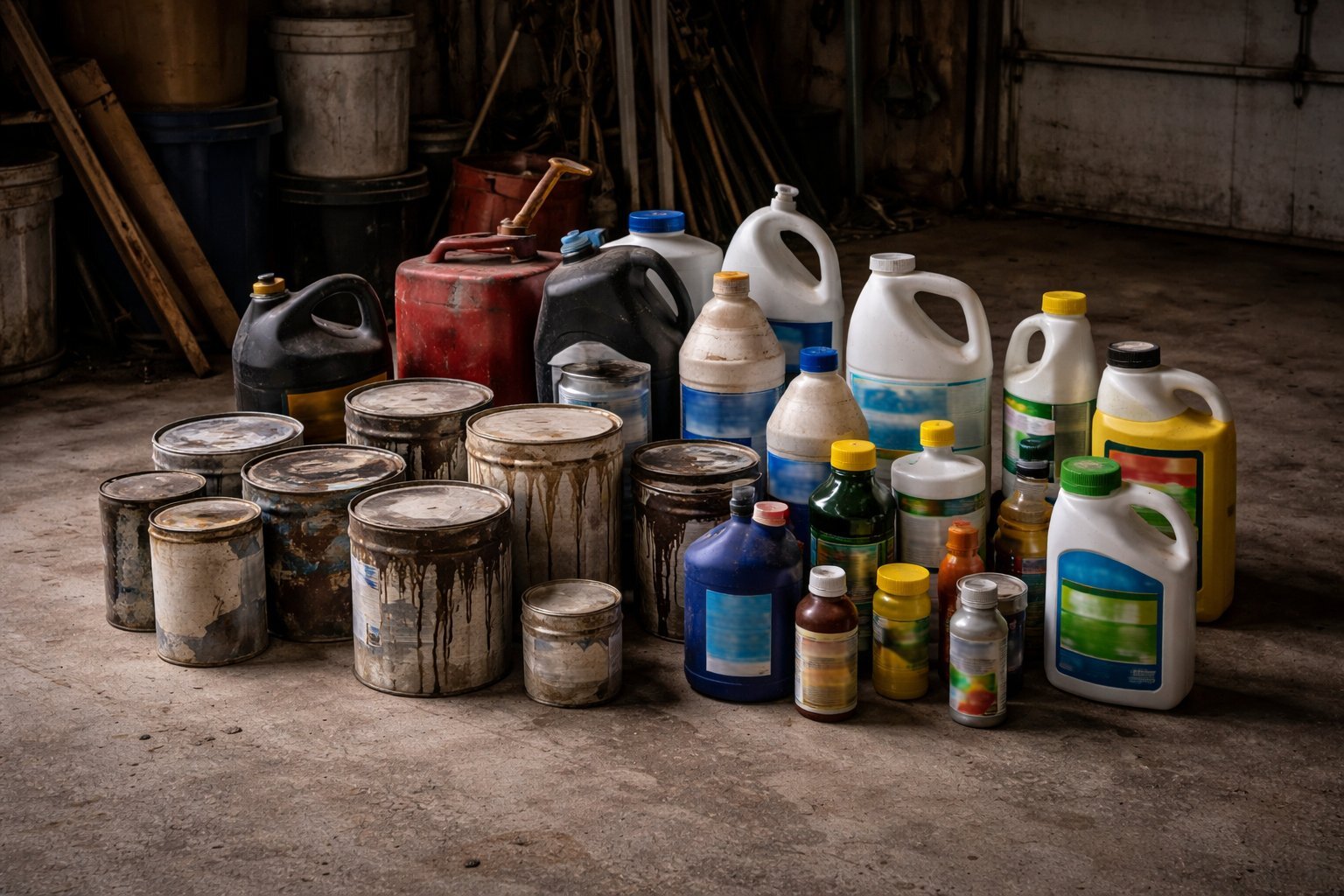
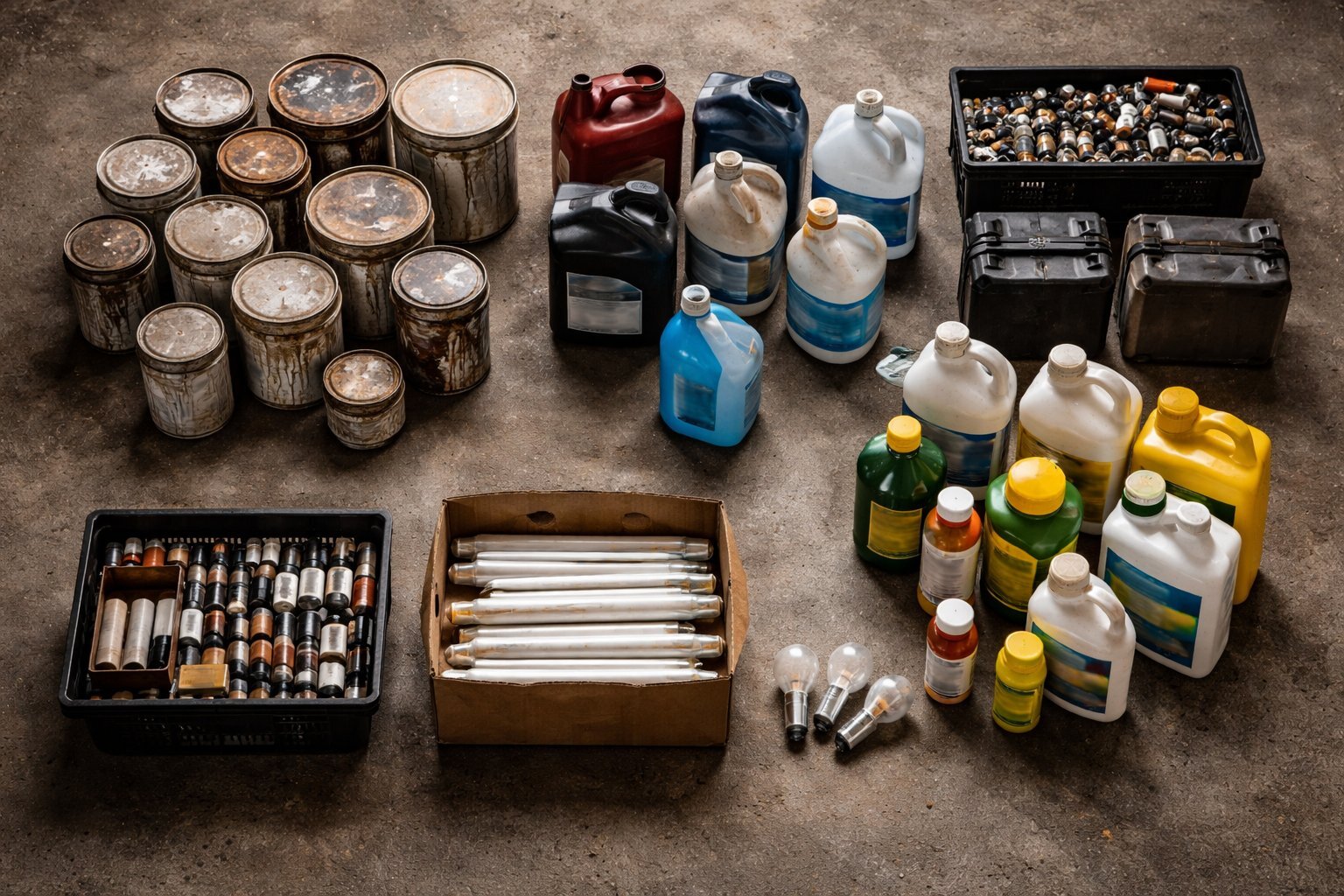
Household hazardous waste chemicals paint pesticides Buffalo NY home disposal

Why Hazardous Waste Is Different

The average Buffalo home contains 100+ pounds of hazardous materials — paint cans in the basement, pesticides in the garage, motor oil from oil changes, old batteries, and cleaning chemicals under the sink. These cannot go in your regular trash, bulk trash, or a dumpster.

Improper disposal contaminates groundwater, violates NYS and federal EPA regulations, and can result in significant fines. Erie County operates a robust free HHW program that handles most common household hazardous waste at no cost — but it requires pre-registration and is appointment-only.

Dealing with hazardous materials in a home you’re selling? Nickel City Buyers purchases as-is →

Personal Protective Equipment — Required Before Handling Any Hazardous Material

Before moving, sorting, or transporting any hazardous waste, you must use appropriate personal protective equipment. The level of protection depends on the material. When in doubt, use maximum protection or do not handle — call a professional.

🚨 Never Handle Without PPE

Even brief skin or eye contact with many household hazardous materials can cause chemical burns, respiratory damage, or long-term health effects. OSHA and EPA guidelines require appropriate PPE for all hazardous material handling. This is not optional.

🦯
Nitrile Gloves
Required — Always
Heavy-duty nitrile gloves (minimum 8 mil) protect against chemical absorption through the skin. Standard latex gloves are NOT sufficient — many solvents and pesticides penetrate latex instantly. Use a new pair for each session and dispose of after use. Available at any hardware store.
🧍
Safety Goggles
Required — Always
Chemical splash goggles — not safety glasses — are required. Goggles seal around the eyes and prevent splash exposure. Safety glasses only protect from impact, not chemical splash. Required any time you open, pour, sort, or move containers of liquid hazardous materials.
🕹
N95 / P100 Respirator
Required for Vapors & Dust
An N95 mask filters airborne particles but does NOT protect against chemical vapors. For solvents, pesticides, and unknown chemicals, use a half-face respirator with organic vapor cartridges (P100/OV). Required for asbestos: use a HEPA P100 respirator. A cloth or surgical mask provides zero protection against chemical vapors.
🦮
Chemical-Resistant Coveralls
Recommended — Liquid Hazards
Disposable Tyvek or chemical-resistant coveralls (Type 5 or 6) protect clothing and skin from splashes and dust contamination. Required for asbestos handling and recommended for pesticide, solvent, and fuel work. Dispose of coveralls as hazardous waste after use — do not wash and reuse.
👢
Chemical-Resistant Boots / Boot Covers
Recommended — Liquid Spill Risk
Rubber or chemical-resistant boots prevent foot contamination from liquid spills on the floor. At minimum, use disposable boot covers over closed-toe shoes. Never handle liquid hazardous materials in open-toe footwear. Required if working in a space with floor-level contamination.
🧠
Full-Face Respirator / SCBA
Licensed Professionals Only
Full-face respirators or self-contained breathing apparatus (SCBA) are required for confirmed asbestos abatement, lead paint removal, unknown chemical spills, and confined-space hazmat work. If a situation requires this level of equipment, it is beyond DIY scope — stop and call a licensed NYS abatement contractor.
💔
Tyvek Hazmat Suit (Full)
Licensed Professionals Only
Full Tyvek or encapsulated hazmat suits are required for confirmed asbestos abatement, large mold remediation, and unknown chemical exposure. These are single-use suits that must be disposed of as hazardous waste after use. If you are considering whether you need one of these, the answer is: call a professional, not DIY.
🏻
Decontamination Protocol
Required After Every Session
Remove PPE in the correct order: outer gloves → coveralls → boot covers → inner gloves → goggles → respirator. Wash hands and exposed skin thoroughly with soap and water. Do not eat, drink, or touch your face during or immediately after hazmat work. Shower before contact with others.
⚠ Ventilation is Non-Negotiable

Never handle hazardous materials in enclosed, unventilated spaces. Open all windows and doors. Use fans to direct air flow outward — not recirculating. If you can smell the material through your respirator, leave immediately, ventilate, and reassess before returning. Chemical vapors accumulate in basements and garages faster than in open spaces.

Erie County Household Hazardous Waste Program

Erie County’s HHW program is one of the most comprehensive in New York State — and it’s free for all Erie County residents.
📅 Annual Collection Events
Erie County typically hosts 2–3 HHW collection events per year — usually spring, summer, and fall. Events are drive-through, appointment-only. 2026 dates TBD — check erie.gov/recycling or call (716) 858-6800. Registration opens 30 days prior. Appointments are limited and fill quickly.
📌 Year-Round Voucher Drop-Off
Can’t wait for an event? Erie County’s HHW Voucher Program allows residents to bring up to 50 pounds of eligible hazardous waste to a private facility in Tonawanda at no cost, year-round. Appointment required — register at erie.gov/recycling or call (716) 858-6800.
📞 24-Hour HHW Hotline
Erie County’s HHW information line is available 24 hours: (716) 858-6800. Use this number to register for events, ask about accepted materials, report disposal questions, or get guidance on unknown substances. Also available via email at recycle@erie.gov.
🏢 Paint-Only Events
Erie County holds separate paint-only collection events (typically in Hamburg and other locations) that accept latex, oil-based, acrylic paint, stains, shellacs, lacquers, sealers, varnishes, and urethanes. No limit on quantity. Businesses welcome. Check erie.gov/recycling for current schedule.
🏭 Business / CESQG Program
WNY businesses, schools, and agencies that qualify as Conditionally Exempt Small Quantity Generators (CESQG) can use Erie County’s commercial HHW program. Contact Erie County DEP at (716) 858-4805 or email gary.carrel@erie.gov for enrollment and disposal cost estimates.
⚠ Registration Is Required
All Erie County HHW events and the year-round voucher drop-off require pre-registration. Walk-ins are not accepted. Residents may be asked to verify that waste was generated by their household. Appointments are limited — register as early as possible once the 30-day registration window opens.
Hazardous waste categories paint chemicals motor oil batteries Buffalo NY disposal

Common Hazardous Waste Categories — Buffalo Homes

Buffalo homes — especially those built before 1980 — commonly contain these hazardous material categories. Each requires specific handling and disposal.

🌞 Paints & Finishes
  • Oil-based paint (hazardous — HHW event required)
  • Latex paint (dried latex = regular trash; wet = HHW)
  • Stains, varnishes, shellacs, lacquers
  • Paint thinners and solvents
  • Wood preservatives
Latex paint can be dried out by leaving the lid off and discarded in regular trash once solidified. Oil-based paint must go to an HHW event — never down the drain or in the trash.
💦 Automotive Fluids
  • Motor oil and oil filters
  • Transmission, brake, and power steering fluid
  • Antifreeze / coolant
  • Gasoline and diesel fuel
  • Carburetor cleaner and degreasers
Used motor oil is accepted at many auto parts stores (AutoZone, Advance Auto) for free. All other automotive fluids go to HHW events or the year-round Tonawanda drop-off.
🌿 Pesticides & Fertilizers
  • Insecticides, herbicides, fungicides
  • Rodent poisons and bait stations
  • Weed killers (concentrated formulas)
  • Pool chemicals (chlorine, acid)
  • Fertilizers with hazardous labeling
Pool chemicals require extra care — NEVER mix chlorine and acid products, even empty containers. Transport separately and inform HHW staff of contents before unloading.
🔋 Batteries & Electronics
  • Lead-acid car batteries (auto stores take free)
  • Lithium-ion batteries (phones, laptops)
  • Rechargeable batteries (NiCd, NiMH)
  • Button/coin batteries
  • Electronics: TVs, computers, monitors
Car batteries are accepted free at AutoZone, O’Reilly, and most auto parts stores. Lithium-ion batteries are a fire risk — never put in trash or recycling. Electronics recycle free at 1120 Seneca Street.
Asbestos & Lead Paint
  • Floor tiles (9″ vinyl tiles common in pre-1980 homes)
  • Pipe and duct insulation wrap
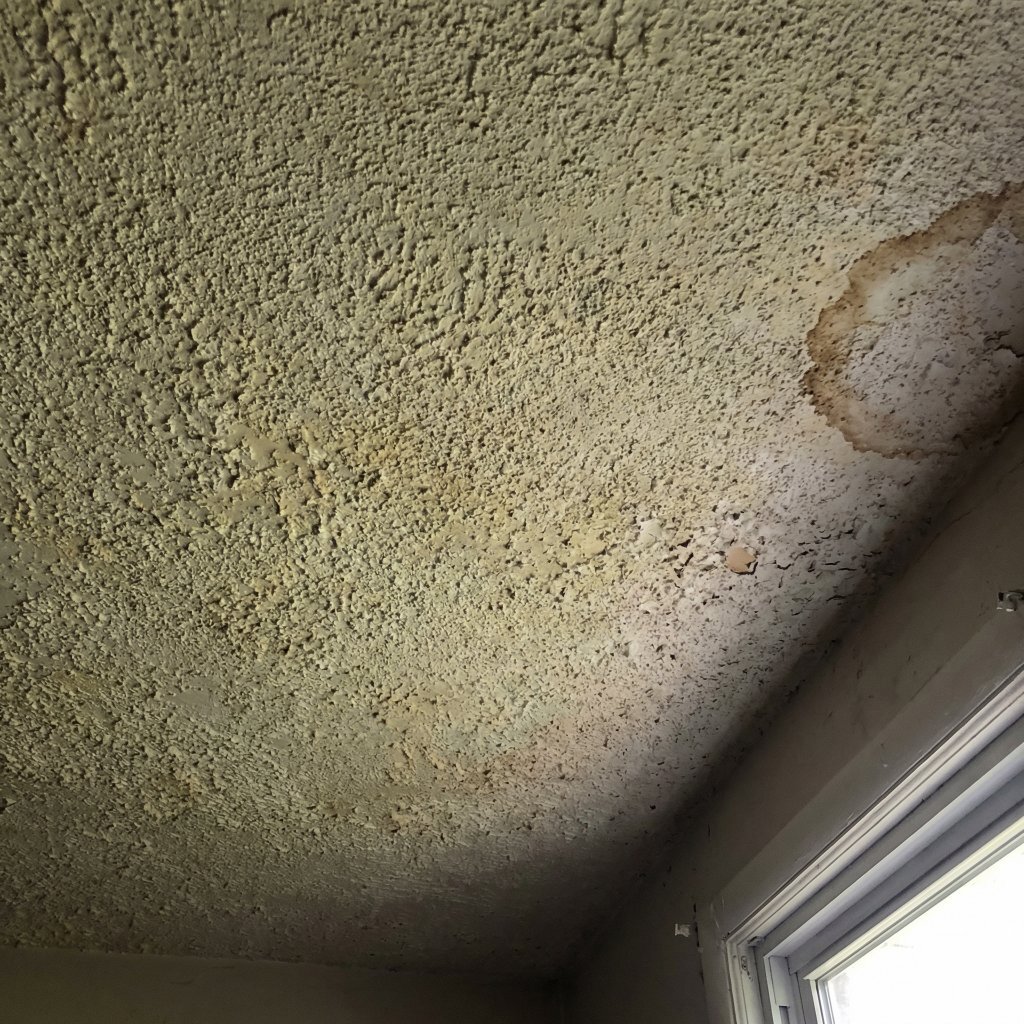
  • Ceiling tiles and textured ceilings
  • Joint compound and drywall (pre-1980)
  • Lead paint (any surface in pre-1978 home)
STOP WORK IMMEDIATELY if you suspect asbestos or lead. These require licensed NYS abatement contractors. Do not disturb, cut, sand, or bag. Erie County HHW events do NOT accept asbestos — abatement is required.
🔌 Mercury & CFLs
  • Thermometers (mercury-containing)
  • Thermostats (older mercury switch types)
  • Fluorescent tubes and CFL bulbs
  • Mercury-containing switches in appliances
Never break fluorescent or CFL bulbs — mercury vapor is released. Home Depot accepts CFL bulbs for recycling. Mercury devices go to Erie County HHW events. If a mercury thermometer breaks indoors, ventilate immediately and call Erie County DEP for guidance.
Asbestos in Buffalo Homes — Stop Work. Do Not Disturb.
🚨 Critical Rule — Read Before Anything Else

If you suspect asbestos in a Buffalo home, stop all work immediately in that area. Do not drill, sand, cut, sweep, vacuum, or bag the material. Disturbed asbestos releases microscopic fibers that cause mesothelioma, lung cancer, and asbestosis — diseases with no cure and latency periods of 20–50 years. You cannot see or smell asbestos fibers in the air. Call a licensed NYS asbestos inspector before resuming any work.

Where Asbestos Hides in Buffalo Homes

Asbestos was used extensively in building materials from the 1930s through the late 1970s. Buffalo’s housing stock is among the oldest in New York State — if your home was built before 1980, assume asbestos is present until professionally tested.
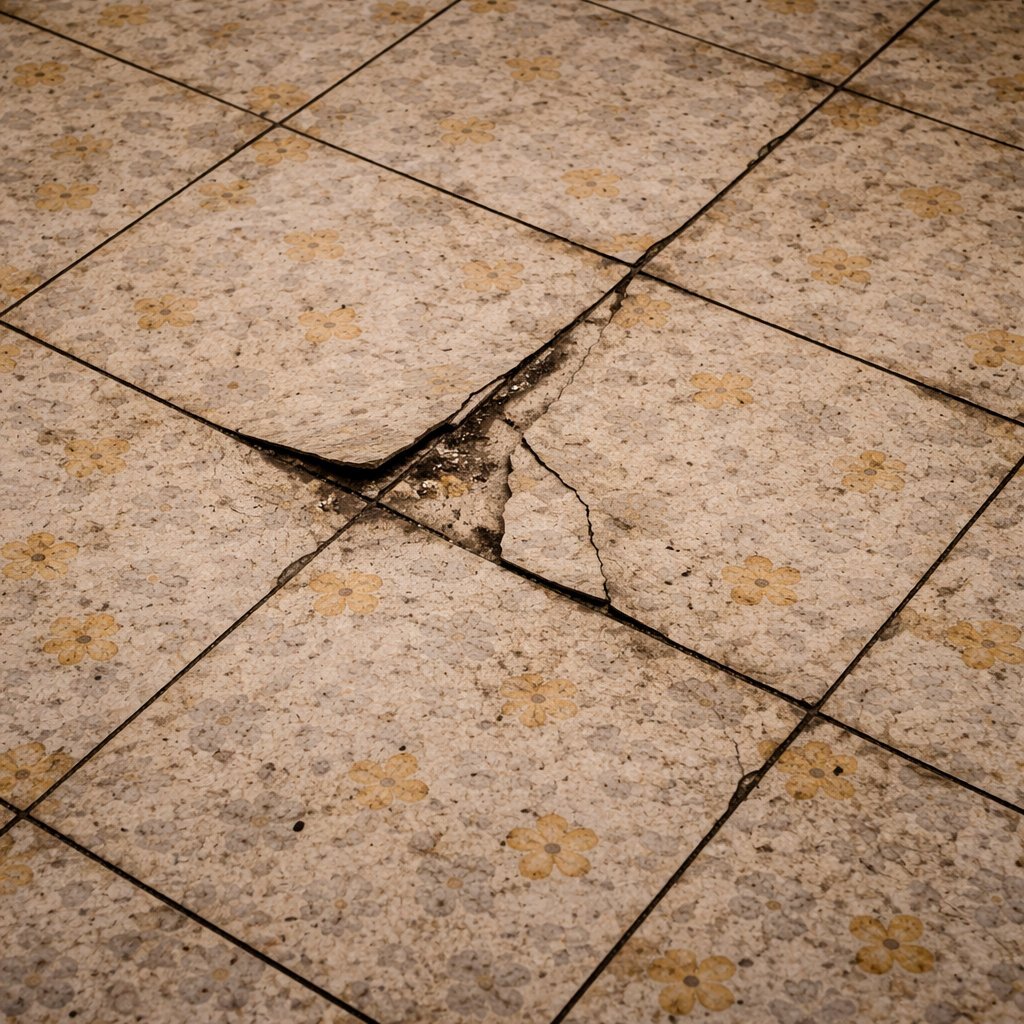
Asbestos 9x9 vinyl floor tiles Buffalo NY home identification guide
Floor Tiles — 9" x 9" Vinyl
The most common asbestos source in Buffalo homes. The 9-inch square size is the giveaway — modern tiles are 12". Colors: black, gray, tan, dark green, maroon. Often found under newer flooring layers. Do not remove, sand, or scrape. Test before any floor work in a pre-1980 home.
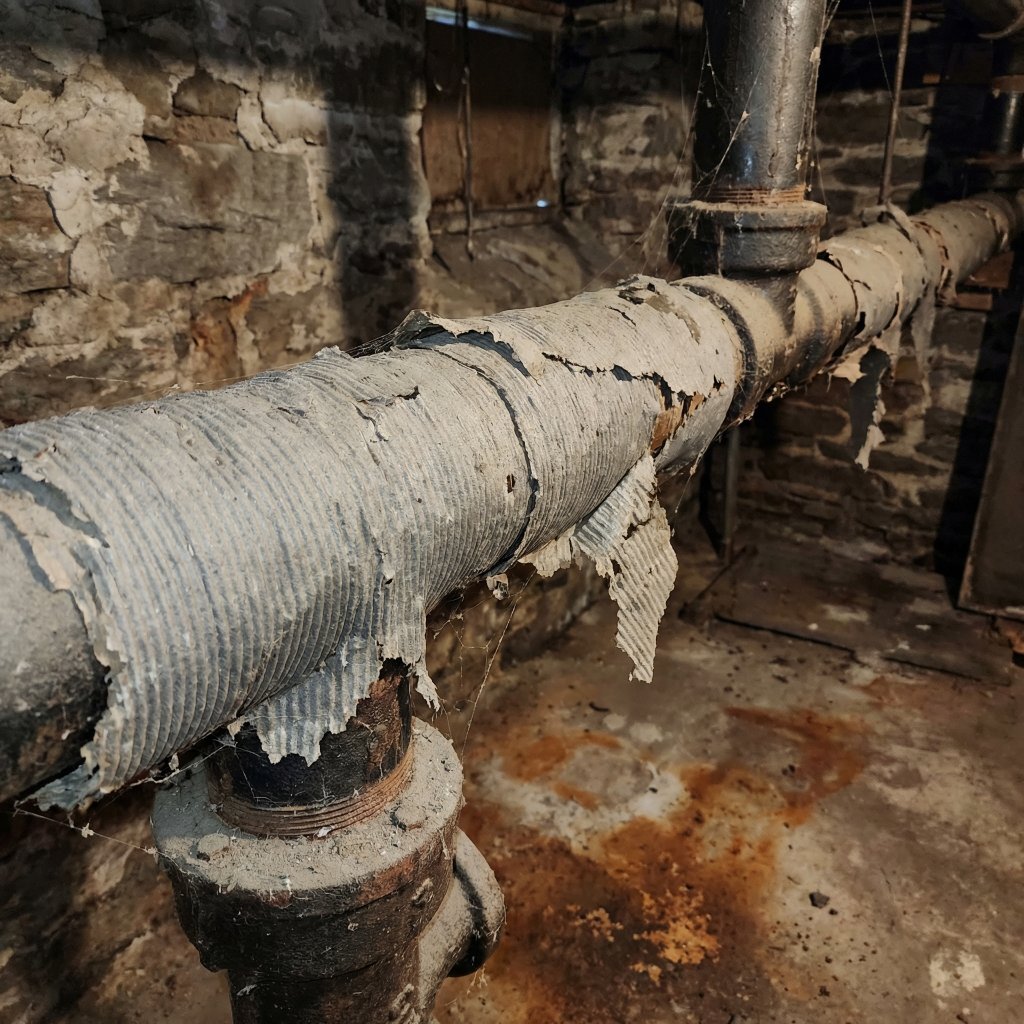
Asbestos pipe insulation wrap Buffalo NY basement identification
Pipe & Duct Insulation
Gray or white corrugated wrap on heating pipes and HVAC ducts in basements and crawl spaces. Often looks like crumbling gray plaster or wrapped in white cloth tape. This is among the highest-risk asbestos material — friable (crumbly) insulation releases fibers easily. Never touch, disturb, or remove.
Asbestos ceiling tiles popcorn textured ceiling Buffalo NY home identification
Ceiling Tiles & Textured Ceilings
Popcorn / acoustic ceilings applied before 1980 commonly contain asbestos. Drop ceiling tiles from the same era may also contain it. Do not scrape, sand, or remove textured ceilings without testing first. Even intact popcorn ceilings should be tested before any overhead work that could disturb the surface.
Asbestos joint compound drywall taping Buffalo NY renovation hazard
Joint Compound & Drywall
Joint compound (drywall mud) used in WNY homes before 1978 frequently contained chrysotile asbestos. Sanding drywall seams in a pre-1980 home is one of the highest-risk renovation activities. If you’re opening walls or ceilings in any pre-1980 Buffalo home, have joint compound tested before sanding begins.
⚠ How to Get Asbestos Tested
A licensed NYS asbestos inspector collects samples and sends them to an accredited lab. Testing typically costs $25–$75 per sample. Do not collect samples yourself — improper sampling releases fibers. Contact Erie County Health Department at (716) 858-7693 for a list of licensed NYS asbestos inspectors in WNY.
🚨 Erie County HHW Does NOT Accept Asbestos
Asbestos abatement and disposal requires a licensed NYS abatement contractor and a licensed disposal facility. Erie County HHW events and the year-round voucher program do not accept asbestos in any form. Bagging asbestos and putting it in a dumpster or trash is illegal under NYS and federal EPA regulations.
Lead Paint in Buffalo Homes — Especially Critical for Children
🚨 Lead Paint — The #1 Environmental Hazard in Buffalo’s Older Housing Stock

Buffalo has one of the highest rates of childhood lead poisoning in New York State, driven by the city’s pre-1940 housing stock. Lead paint was banned in residential use in 1978 — any home built before that date must be assumed to contain lead paint. Children under 6 and pregnant women face the greatest risk. Lead poisoning causes permanent neurological damage, developmental delays, and learning disabilities. There is no safe level of lead exposure for children.

Where Lead Paint Is Found in Buffalo Homes

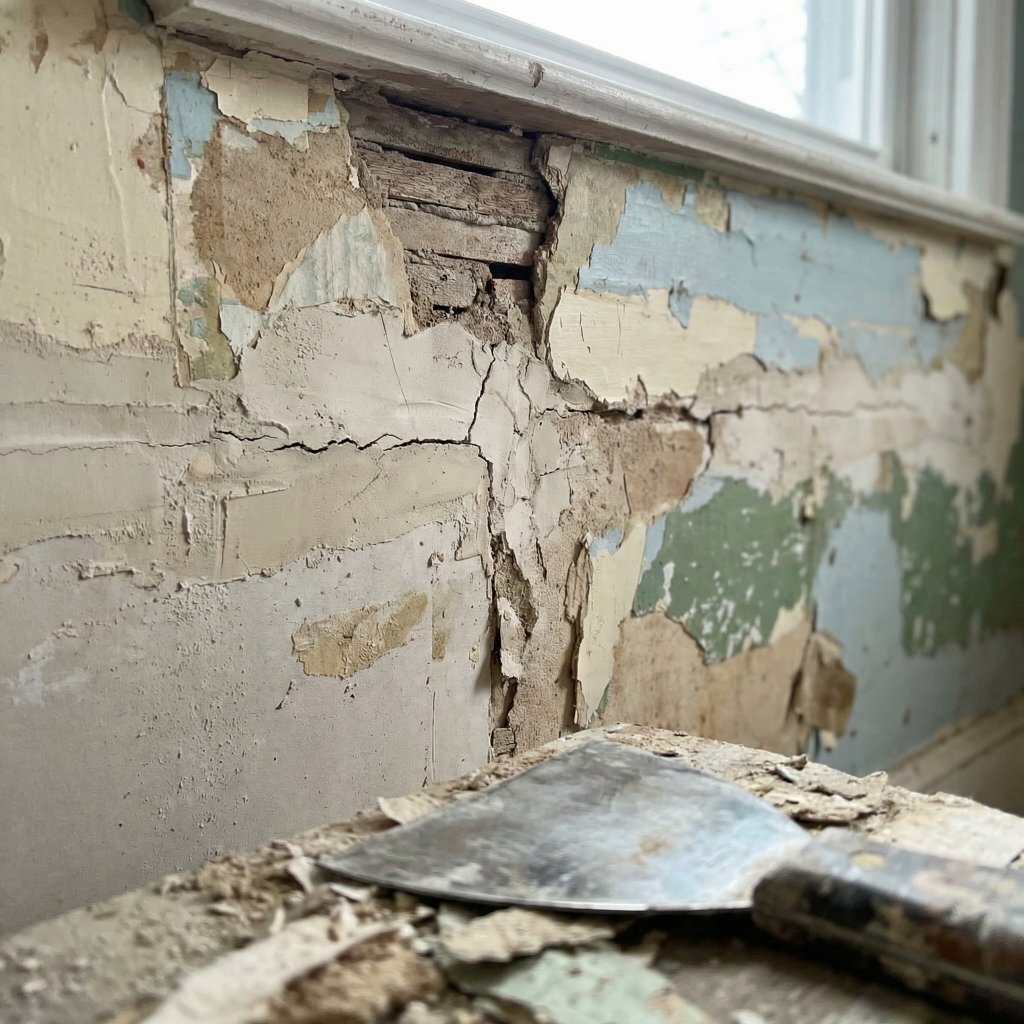
Lead paint is not dangerous when intact and undisturbed. It becomes dangerous when it deteriorates, is disturbed by sanding, scraping, or drilling, or creates lead dust through friction (windows and doors).

🏠 Window Wells & Sills
The highest-risk lead paint location in a Buffalo home. The friction of opening and closing windows grinds painted surfaces together, constantly generating lead dust that settles on sills and floors. Lead dust is invisible. Children playing near windows in older homes are at severe risk. Window replacements in pre-1978 homes require lead-safe work practices.
🚪 Doors & Door Frames
Like windows, doors create lead dust through friction at the edges. Door frames, jambs, and casings in pre-1978 homes are high-priority areas. Common locations: front door, interior room doors, basement door frames. Painted steel doors common in Buffalo rowhouses may also contain lead-based primer coats.
🏠 Exterior Siding & Porches
Peeling exterior paint on clapboard and vinyl-over-wood siding falls into soil around the foundation — a major lead exposure pathway for children playing outside. Painted porch floors, railings, and columns are also high-risk. Deteriorating exterior lead paint requires immediate stabilization by a licensed contractor.
🔄 Interior Trim & Baseboards
Stair rails, baseboards, crown molding, window trim, and chair rails in pre-1978 homes are common lead paint locations. Bright white, yellow, and red paints from this era had the highest lead content. Never sand, scrape, or dry-scrub interior trim in a pre-1978 Buffalo home without lead testing first.
🚨 Never Sand or Dry-Scrape
Dry sanding or scraping lead paint is the single most dangerous DIY activity in a pre-1978 Buffalo home. It generates invisible lead dust that contaminates the entire room, embeds in carpet and upholstery, and can persist for years. Even a brief sanding session without containment can exceed EPA hazard thresholds. Always wet-sand and use HEPA vacuum containment — or hire a certified contractor.
⚠ EPA RRP Rule — Contractor Requirement
Any contractor performing renovation, repair, or painting work in pre-1978 homes in Buffalo must be EPA-certified under the Renovation, Repair, and Painting (RRP) Rule. This is a federal requirement. Always verify your contractor is RRP-certified before any renovation work begins. Violations carry significant fines under NYS and federal law.
✓ Free Lead Testing for Children
Erie County Department of Health offers free blood lead level testing for children. If a child under 6 lives in a pre-1978 Buffalo home, testing is strongly recommended. Call Erie County DOH at (716) 858-7693. NYS also requires blood lead testing for all children at ages 1 and 2 through the Medicaid Early Periodic Screening program.
🏠 Lead Paint Home Testing
DIY lead test swabs are available at hardware stores ($10–$30) and provide a quick positive/negative indicator, but are not definitive for legal or real estate purposes. A certified lead inspector or risk assessor performs comprehensive testing — required for NYS lead hazard disclosure compliance. Contact Erie County DOH at (716) 858-7693 for certified inspector referrals.
⚠ Selling a Buffalo Home With Lead Paint?

Federal law requires sellers to disclose known lead-based paint hazards in homes built before 1978. Buyers have a 10-day window to conduct lead inspections. If lead paint issues are a concern, Nickel City Buyers purchases Buffalo homes as-is — no remediation required before sale. Get a cash offer →

Erie County HHW Events — What Is and Is NOT Accepted

✓ Accepted at HHW Events

  • All types of paint (latex, oil-based, acrylic)
  • Stains, varnishes, shellacs, lacquers
  • Pesticides, herbicides, insecticides
  • Motor oil and automotive fluids
  • Gasoline and diesel fuel
  • Pool chemicals (inform staff — no mixing)
  • Household cleaners and solvents
  • Mercury-containing devices and thermometers
  • Small propane cylinders (1 lb. camping size)
  • Batteries (all types)
  • Fluorescent tubes and CFL bulbs
  • Photographic chemicals

✗ NOT Accepted at HHW Events

  • Asbestos — requires licensed abatement
  • Explosives, ammunition, and gunpowder — contact local police
  • Smoke detectors with radioactive material — call First Alert 1-800-323-9005
  • Tires — see tire disposal guide
  • Cooking oils — call Darling International (716) 895-0655
  • Syringes and needles — Erie County DOH needle disposal program
  • PCB-containing equipment (large transformers)
  • Radioactive materials
  • Commercial / industrial quantities
  • Unknown liquids in unmarked containers
🚨 Unknown Containers — Do Not Open

If you find unlabeled or unknown containers of liquid or powder in a Buffalo home you are cleaning out, do NOT open, smell, or move them. Call Erie County DEP at (716) 858-4805 or the EPA Emergency line at 1-800-424-8802 for guidance. Unknown substances may be reactive, explosive, or acutely toxic.

Special Situations — Buffalo Homes

Older WNY homes, estate sales, and foreclosures frequently present hazardous material situations beyond routine disposal.

🏠 Pre-1980 Buffalo Homes
Assume asbestos in floor tiles, pipe insulation, ceiling tiles, and joint compound. Assume lead paint on any painted surface. Do not sand, drill, or disturb these materials before testing. Contact a licensed NYS inspector for assessment before any renovation work begins. Erie County Health: (716) 858-7693.
🚨 Estate & Foreclosure Cleanouts
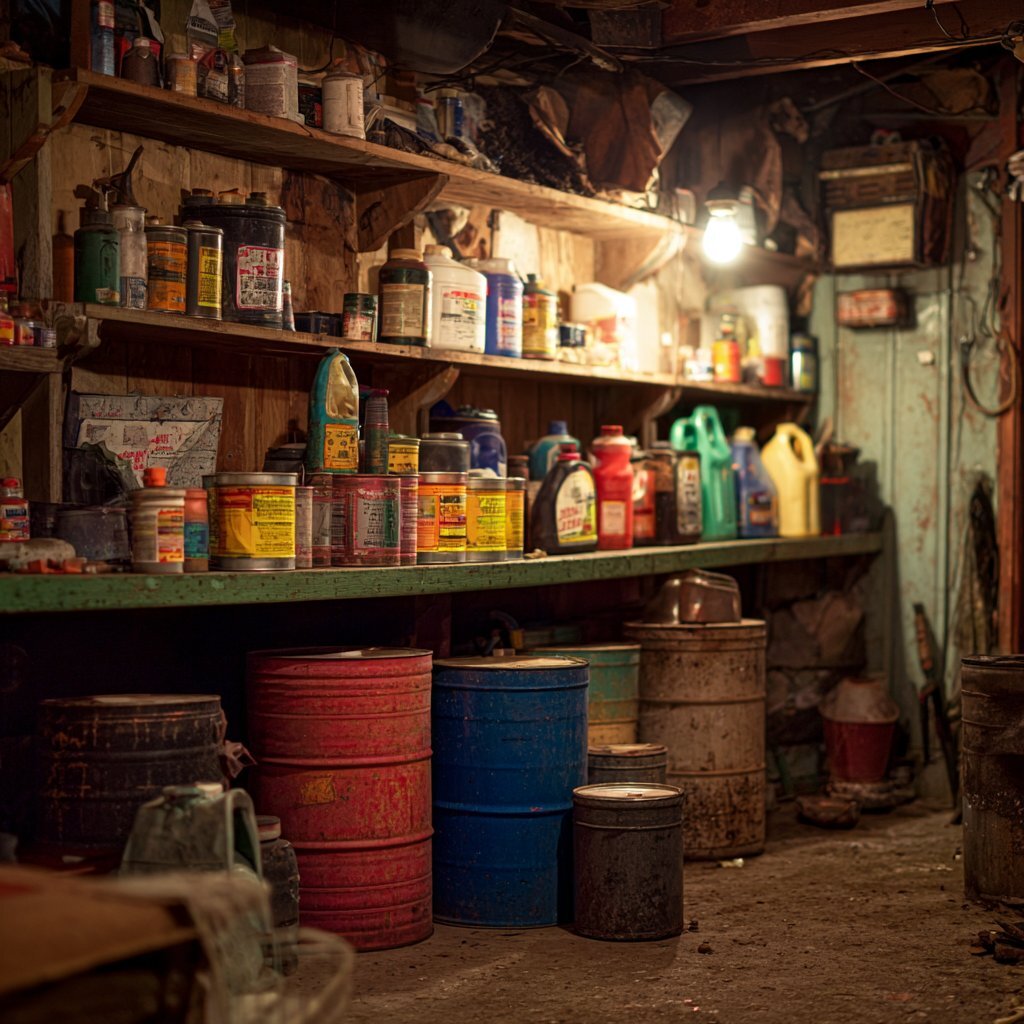
Homes that have been vacant for years often accumulate deteriorating chemical containers that have leaked, corroded, or separated. Never clean these out without PPE. Unknown substances require professional assessment. If the volume exceeds 50 lbs, the year-round voucher program may not be sufficient — contact Erie County DEP at (716) 858-4805.
☕ Oil Tanks — Underground and Aboveground
WNY homes with oil heat may have underground storage tanks (USTs) or aboveground tanks. Abandoned or leaking oil tanks are a serious environmental and legal liability under NYS DEC regulations. Removal requires a licensed petroleum contractor and DEC notification. Never attempt to drain or remove an oil tank without licensed contractors.
🌊 Medications & Sharps
Prescription drugs should not go in the trash or down the drain. DEA National Drug Take-Back events and year-round collection kiosks at many WNY pharmacies accept medications for safe disposal. Sharps and needles: contact Erie County DOH at (716) 858-7695 for needle disposal sites — free sharps containers available at all manned sites.
🏠 Selling a Home With Hazardous Materials?
NYS requires disclosure of known environmental hazards when selling a home. If a Buffalo home has asbestos, lead paint, oil tank issues, or other hazardous material concerns, Nickel City Buyers purchases as-is — no remediation required before sale. Get a cash offer →

How to Prepare for an Erie County HHW Event

Proper preparation keeps you safe, other residents safe, and HHW staff safe.

1

Register Early

Events fill within days of opening. Register the day registration opens at erie.gov/recycling or call (716) 858-6800. You must have an appointment — no walk-ins accepted.

2

Sort & Label Everything

Keep original containers with original labels whenever possible. Separate incompatible materials (oxidizers from flammables, acids from bases). Group by category before loading.

3

Pack Safely

Place containers upright in cardboard boxes. Line boxes with plastic bags. Do not overfill. Transport in your trunk or truck bed — never in the passenger compartment. Keep windows open.

4

Wear PPE at Drop-Off

Wear nitrile gloves and eye protection when unloading at the event. Inform staff of any leaking containers, unlabeled materials, or pool chemicals before they touch anything.

Frequently Asked Questions — Hazardous Waste Disposal Buffalo NY

Common questions from Erie County residents handling hazardous materials.

Where can I dispose of hazardous waste in Buffalo NY?
Erie County offers two main options: annual HHW collection events (free, appointment-only, typically spring and fall) and a year-round HHW Voucher Drop-Off Program allowing up to 50 pounds of hazardous waste to be dropped at a private facility in Tonawanda at no cost. Both require pre-registration. Call the 24-hour HHW hotline at (716) 858-6800 or visit erie.gov/recycling.
What protective equipment do I need to handle hazardous waste?
At minimum: heavy-duty nitrile gloves (not latex), chemical splash goggles (not safety glasses), and a respirator with organic vapor cartridges for solvents and pesticides. For asbestos, lead paint, or unknown chemicals, do not attempt DIY handling — these require licensed NYS abatement professionals with full-face respirators and Tyvek suits. Always work in ventilated areas and decontaminate thoroughly after any hazmat work.
Can I put paint in the trash in Buffalo NY?
Dried latex paint only — remove the lid and allow the paint to fully solidify before placing in regular trash. Wet latex paint and all oil-based paints, stains, varnishes, and solvents must go to an Erie County HHW event or the year-round Tonawanda drop-off. Erie County also holds paint-only collection events with no quantity limit. Never pour paint down the drain or into the ground.
I found asbestos in a Buffalo home I’m cleaning out — what do I do?
Stop work immediately in the affected area. Do not disturb, cut, drill, sand, or bag the material. Erie County HHW events do not accept asbestos — it requires a licensed NYS asbestos abatement contractor. Contact Erie County Health Department at (716) 858-7693 or the NYS DEC for licensed contractor referrals. Asbestos is common in Buffalo homes built before 1980 — floor tiles, pipe insulation, ceiling tiles, and joint compound are frequent sources.
Where do I recycle batteries and electronics in Buffalo?
Car/lead-acid batteries: accepted free at AutoZone, O’Reilly, and most auto parts stores. Lithium-ion and rechargeable batteries: Erie County HHW events or drop boxes at many retail stores. Electronics (TVs, computers, monitors): 1120 Seneca Street, Buffalo — free drop-off. CFL bulbs and fluorescent tubes: Home Depot accepts CFL bulbs for free recycling. Never put lithium-ion batteries in the trash — they are a fire risk.
What do I do with hazardous waste when selling a Buffalo home?
NYS requires disclosure of known environmental hazards when selling. For small quantities of standard HHW, Erie County’s program handles disposal before listing. For larger volumes, asbestos, lead paint, or oil tank issues, Nickel City Buyers purchases Buffalo homes as-is — no remediation or cleanup required before sale. Call (716) 557-7005 or get a cash offer at nickelcitybuyers.com.
🏠

Selling a Buffalo Home With Hazardous Material Concerns?

Asbestos, lead paint, oil tanks, or a basement full of old chemicals — Nickel City Buyers purchases Buffalo and Erie County homes as-is. No remediation required. Get a free cash offer today →

Asbestos in Buffalo Homes — Where It Hides & What It Looks Like

Buffalo homes built before 1980 almost certainly contain asbestos somewhere. Knowing where to look — and what not to touch — could save your life. Never disturb suspected asbestos. Test first, always.

🚨 NYS Law — ICR 56 (Industrial Code Rule 56)

New York has the strictest asbestos regulations in the United States. Asbestos abatement in Buffalo must be performed by a contractor licensed by the NYS Department of Labor. Exception: owner-occupied single-family homeowners may remove asbestos themselves, but this is strongly discouraged without professional training and full PPE. The City of Buffalo does not issue asbestos permits — NYS DOL regulates all asbestos work. NYS DOL Asbestos Control Bureau Buffalo office: 295 Main St Suite 905, Buffalo NY 14203 — (716) 847-7126.

The 6 Most Common Asbestos Locations in Buffalo Homes

🧱
9″ Floor Tiles
Very Common — Pre-1980
The most common asbestos source in WNY homes. Nine-inch square vinyl floor tiles installed in kitchens, bathrooms, and basements from the 1950s–1970s frequently contain up to 25% chrysotile asbestos. The tiles themselves are often encapsulated and safe if undisturbed. The adhesive (mastic) beneath them is also often asbestos-containing. Do not sand, scrape, chip, or attempt to remove. Test before any floor work.
✗ Do not remove without testing. If tiles are intact — leave them.
🔌
Pipe & Duct Insulation
High Risk — Friable When Damaged
Gray or white wrap insulation on steam pipes, hot water pipes, and HVAC ducts in basements and utility rooms was commonly made from amosite or chrysotile asbestos through the late 1970s. This is often the most dangerous form because it can be friable — meaning it crumbles and releases fibers when touched. Often wrapped in a gray or tan corrugated paper-like material.
✗ Extremely friable. Do not touch, bump, or disturb. High fiber release risk.
🏠
Ceiling Tiles & Textured Ceilings
Common — Especially Basements
Drop ceiling tiles from the 1950s–70s and spray-applied textured ceiling coatings (“popcorn ceilings”) commonly contain asbestos. Popcorn ceilings are especially problematic — the spray texture is highly friable once damaged or water-stained. Any ceiling work in a pre-1980 Buffalo home requires testing before scraping, sanding, or removal.
⚠ Water damage accelerates fiber release. Test immediately if water-stained.
🏙
Drywall Joint Compound
Widespread — Often Overlooked
Joint compound (used to finish drywall seams) manufactured before 1977 frequently contained chrysotile asbestos. This is one of the most overlooked sources in Buffalo homes because it looks like ordinary spackling. Sanding old drywall seams is an extremely high-risk activity. Many renovation workers have been unknowingly exposed this way. Any sanding of pre-1980 drywall requires testing first.
✗ Never sand pre-1980 drywall without testing. Sanding causes major fiber release.
🌊
Roof Shingles & Siding
Common — Asbestos Cement Products
Asbestos cement roof shingles and siding panels (often appearing as gray corrugated panels or flat shingles) were widely used in WNY into the 1970s. When intact and undamaged, the risk is relatively low. Cutting, breaking, or removing these materials releases fibers. Roofing or siding replacement on any pre-1980 Buffalo home requires asbestos testing and, if positive, licensed abatement before tear-off.
⚠ Encapsulated when intact. Test before any roofing or siding work begins.
🔥
Boilers, Furnaces & Fireproofing
High Risk — Friable Insulation
Older boilers and furnaces in Buffalo homes are frequently insulated with asbestos-containing materials — including blanket insulation, rope gaskets, and spray-applied fireproofing. Boiler room walls and ceilings may also have been spray-fireproofed. Any work on a pre-1980 boiler or furnace requires inspection. Do not disturb old boiler insulation without testing — this is a high friability, high exposure risk.
✗ High friability risk. Call a licensed inspector before any boiler room work.

Licensed Asbestos Contractors Serving Buffalo & Erie County

CRAL Contracting
Website: cralinc.com  •  Serving WNY 20+ years
Full-service residential and commercial asbestos abatement. NYS-certified technicians. No subcontracting. Starts at $1,500 depending on scope.
Buffalo Environmental & Construction Group
Website: buffaloenv.com  •  Since 1994
Full-service asbestos testing, abatement, and remediation. Also handles tank removal, lead paint, mold, and demolition. 20+ years in Buffalo.
S.E.G. Construction Inc.
Website: segconstructioninc.com  •  Since 2007  •  NYS WBE Certified
Specializes in asbestos removal, lead remediation, PCB handling, and mold removal. EPA RRP certified. Serves residential and commercial in WNY.
Arric Corporation
Website: arriccorporation.com  •  Depew, NY  •  Since 1989
Asbestos removal, mold abatement, and industrial insulation. Fully licensed. Serves WNY and CNY. Long-standing WNY contractor.
Empire Building Diagnostics (EBD)
Website: ebdinc.com  •  30+ years serving Buffalo
Asbestos abatement for residential and commercial properties. Detailed remediation process, experienced with complex WNY building layouts.
Find a NYS-Licensed Contractor
The NYS Department of Labor maintains a searchable database of all licensed asbestos contractors in New York State. Always verify your contractor’s license before work begins. Search NYS DOL Asbestos Contractor Database →
Oil Tanks in Buffalo Homes — Underground & Aboveground

Thousands of Buffalo and WNY homes heated with oil have underground storage tanks (USTs) or aboveground tanks that are abandoned, aging, or unknown. This is one of the most significant hidden liabilities in the WNY real estate market.

Underground Storage Tanks (USTs)
  • Typically 275–1,000 gallons, buried 3–6 feet underground
  • Often unknown to current owners — previous owners may not have disclosed
  • Steel tanks corrode within 15–25 years and leak into surrounding soil
  • Contamination can spread to neighboring properties and groundwater
  • Most lenders and buyers will require removal or inspection before closing
Aboveground Storage Tanks (ASTs)
  • Typically 275 gallons, located in basement or utility room
  • Easier to inspect and remove than underground tanks
  • Rust, leaks, and sediment build-up are common in older tanks
  • Less of a hidden liability but still requires proper removal and disposal
  • Less expensive to remove than underground tanks

Oil Tank Removal Cost Guide — Buffalo & WNY

Aboveground removal
$500–$1,500
275 gal basement tank, no contamination
Underground removal
$1,500–$4,000
Standard UST removal with soil testing, no contamination
Soil testing
$300–$500
Required at removal; lab analysis of soil samples around tank
Contaminated soil remediation
$5,000–$20,000+
If soil contamination confirmed. Extent of spread determines cost.
⚠ NYS Requirements for Oil Tank Removal in Buffalo & Erie County

A permit from your local building or fire department is required before UST removal ($50–$200 fee). Written notification to NYSDEC is required for regulated tanks. A 811 NYS Dig Safe excavation notification is mandatory before any digging. If a spill or leak is discovered during removal, it must be reported to the NYSDEC Spills Hotline within 2 hours: 1-800-457-7362. Tank removal must be performed by a licensed petroleum contractor. Buffalo Environmental & Construction Group (buffaloenv.com) specializes in UST removal in Erie County with full NYSDEC compliance.

Lead Paint in Buffalo Homes — Testing Guide & Abatement Costs

Any Buffalo home built before 1978 is presumed to contain lead paint under federal law. Homes built before 1960 almost certainly do. Lead paint is the #1 environmental hazard affecting WNY children.

🔎 DIY Test Kits — $10–$25
Swab test kits (3M LeadCheck, First Alert) are available at hardware stores. They detect lead in paint on contact. Limitations: Only test the surface layer — lead may be present under layers of newer paint. False negatives are possible. Not accepted for legal/disclosure purposes. Good for a quick initial screening but not a substitute for professional testing.
🏭 XRF Testing (Professional) — $300–$500
X-ray fluorescence (XRF) testing by an EPA-certified inspector is the gold standard. Tests through all paint layers non-destructively. Results are legally accepted for disclosure. Required before any renovation work covered by EPA’s Renovation, Repair and Painting (RRP) Rule in pre-1978 homes. Contact Buffalo Environmental & Construction Group or S.E.G. Construction for WNY lead testing.
🏠 Encapsulation vs. Removal — Costs
Encapsulation (covering intact lead paint with a bonded coating): $1,000–$3,000. Lower cost, acceptable when paint is intact. Does not eliminate lead. Full abatement (complete removal of lead paint): $3,000–$12,000+ depending on scope. Eliminates the hazard permanently. Required for certain conditions, children’s environments, and pre-sale remediation if mandated by lender.
⚠ EPA RRP Rule — Required for Contractors
Any contractor performing renovation, repair, or painting in a pre-1978 home must be EPA Renovation, Repair and Painting (RRP) certified. Hiring an uncertified contractor for work that disturbs lead paint is a federal violation. Always verify RRP certification before hiring anyone to work on a pre-1978 Buffalo home. S.E.G. Construction holds EPA RRP certification for WNY.
🚨 Buffalo Has One of the Highest Childhood Lead Poisoning Rates in NYS

Erie County and the City of Buffalo have historically high rates of childhood lead poisoning due to the age and condition of the housing stock. If you have children under 6 in a pre-1978 Buffalo home, contact the Erie County Health Department Lead Program at (716) 858-7693 for free blood lead testing and home inspection resources. This is not optional — lead exposure at any level causes permanent neurological damage in young children.

Chemical Identification Guide — What You Find in Old Buffalo Basements

Cleaning out a Buffalo home built before 1990? Here’s what those old containers actually are, their hazard level, and exactly how to dispose of them in Erie County.

What You Found Hazard Level PPE Required How to Dispose in Erie County
Old paint cans (oil-based) HIGH Nitrile gloves, goggles, OV respirator Erie County HHW event or year-round Tonawanda drop-off. Never trash or drain.
Old paint cans (latex/water-based) LOW (if dried) Gloves only if wet Dry it out (leave lid off), then regular trash. Wet latex → HHW event or paint-only collection.
Paint thinner / mineral spirits HIGH — Flammable Nitrile gloves, goggles, OV respirator. No open flame. Erie County HHW event. Keep sealed in original container. Never pour down drain.
Acetone / nail polish remover (large qty) HIGH — Extremely Flammable Nitrile gloves, goggles, OV respirator. No ignition sources. Erie County HHW event. Small household quantities may air-dry in ventilated area. Commercial quantities: licensed disposal.
Muriatic acid (pool/masonry use) VERY HIGH — Corrosive Nitrile gloves, face shield, chemical coveralls. Never mix with bleach or ammonia. Erie County HHW event. Inform staff of acid contents before unloading. Keep completely sealed and upright during transport.
Pesticides / insecticides (old bottles) HIGH — Toxic Nitrile gloves, goggles, OV respirator, coveralls. Do not breathe dust from old powder pesticides. Erie County HHW event. Do not try to use old pesticides — many pre-1980 formulas contain banned compounds (DDT, chlordane).
Motor oil / used oil MEDIUM Nitrile gloves AutoZone, O’Reilly, and Advance Auto accept used motor oil for free. Erie County HHW event also accepts. Never pour on ground or down drain.
Antifreeze / coolant MEDIUM — Toxic to animals Nitrile gloves, eye protection Erie County HHW event. Some auto parts stores accept. Sweet taste attracts pets — keep sealed and away from animals.
Old car batteries (lead-acid) MEDIUM — Acid & Lead Gloves, eye protection. Keep upright — battery acid is corrosive if spilled. AutoZone, O’Reilly, Advance Auto — all accept for FREE. Required by NYS law. Do not put in trash or recycling.
Unknown liquid in unlabeled container UNKNOWN — Treat as HIGH Full PPE. Do NOT open or smell. Keep in place if possible. Call Erie County DEP (716) 858-4805 or EPA Emergency line 1-800-424-8802 for guidance before moving. Unknown substances may be reactive.
Old pool chemicals (chlorine, shock) HIGH — Reactive Full PPE including face shield. NEVER mix with any other chemical. Erie County HHW event. Transport separately from all other chemicals. Inform HHW staff before unloading. Never mix chlorine and acid products — creates toxic chlorine gas.

True Abatement Cost Guide — Buffalo & WNY

What professional hazardous material remediation actually costs in Western New York. Nobody publishes these numbers — until now.

Asbestos — Floor Tiles (9″)
$1,500–$4,000
Single room with 9″ vinyl tile removal and disposal. Per-room cost. Whole-house projects significantly higher. Includes containment, HEPA filtration, disposal at licensed facility. Air clearance testing may add $300–$600.
Asbestos — Pipe Insulation
$2,000–$8,000+
Basement pipe wrap removal. Cost varies significantly by linear footage and accessibility. Friable insulation requires full containment and decontamination unit. Highly variable by project scope.
Asbestos — Popcorn Ceiling
$1,500–$3,500
Per room. Full containment, wet removal method required, HEPA cleanup. Often combined with ceiling replacement. Air quality test afterward recommended.
Lead Paint — Encapsulation
$1,000–$3,000
Covering intact lead paint with encapsulant coating. Per room or per component (windows, trim, doors). Lower cost but does not eliminate lead — requires disclosure and ongoing maintenance monitoring.
Lead Paint — Full Abatement
$3,000–$12,000+
Complete removal of lead paint. Cost depends on scope — windows, trim, walls, exterior siding. Permanently eliminates the hazard. Required by some lenders and in certain high-risk situations (children, rental units).
Oil Tank — UST Removal (No Contamination)
$1,500–$4,000
Includes permit, excavation, tank removal, soil testing, and closure report. If soil contamination is found, remediation costs are separate and can range from $5,000–$20,000+ depending on extent of spread.
⚠ Get Multiple Quotes — Prices Vary Significantly

Abatement costs in Buffalo vary significantly by contractor, project scope, accessibility, and time of year. Always get at least 2–3 quotes from licensed NYS contractors. The NYS DOL database lets you verify any contractor’s license before signing a contract. A legitimate WNY abatement contractor will always provide a written scope of work, licensing information, and air clearance testing plan before starting.

NYS Property Condition Disclosure Act — What You Must Disclose When Selling

New York State law requires sellers to disclose known environmental and hazardous material conditions when selling a home. Getting this wrong can void a sale, expose you to lawsuits, and result in significant financial liability.

You MUST Disclose
  • Known presence of asbestos, lead paint, or radon above EPA action levels
  • Known or suspected underground storage tanks on the property
  • Known soil contamination or oil spills on the property
  • Prior use of the property for commercial or industrial purposes
  • Known history of flooding or water infiltration
  • Any pending environmental violations or orders from NYS DEC or EPA
  • Known presence of mold or prior mold remediation
Seller’s Options Under NYS Law
Option 1 — Complete the disclosure form: Fill out the NYS Property Condition Disclosure Statement honestly, disclosing all known conditions. Buyer acknowledges receipt and the sale proceeds with full disclosure.
Option 2 — Offer a $500 credit: Sellers may decline to complete the form and instead give the buyer a $500 credit at closing. This does NOT protect the seller from fraud claims if conditions are concealed.
Option 3 — Sell as-is to a cash buyer: Selling to Nickel City Buyers bypasses traditional disclosure requirements that apply to conventional sales — we buy with full knowledge of property condition. Get a cash offer →
🚨 Concealment of Known Environmental Hazards = Fraud

Knowingly concealing a material defect — including asbestos, lead paint, oil tank leaks, or soil contamination — in a NYS real estate transaction constitutes fraud and misrepresentation. Buyers can sue for rescission of the sale and damages. Sellers have lost significantly more than the cost of disclosure or remediation by failing to disclose known hazardous conditions. When in doubt, disclose — or call an attorney.

🚨 Emergency Contacts — Hazardous Material Incidents in Buffalo & Erie County

Save these numbers before you need them. In a hazmat emergency, every minute matters.

🚨 Life-Threatening Emergency
911
Chemical exposure, spill fire, explosion, or any immediate threat to life or safety.
EPA Emergency Spill Hotline
1-800-424-8802
24-hour national hotline for chemical spills, releases, and environmental emergencies.
NYSDEC Spills Hotline
1-800-457-7362
Report oil tank leaks, petroleum spills >5 gallons, and environmental releases. Reporting is legally required within 2 hours of discovery.
Erie County HHW Hotline (24-Hr)
(716) 858-6800
HHW disposal questions, event registration, unknown substance guidance. Available 24 hours. Email: recycle@erie.gov
Erie County DEP
(716) 858-4805
Business hazmat disposal (CESQG program), large-quantity questions, environmental planning guidance.
Poison Control Center
1-800-222-1222
Chemical exposure, ingestion, or inhalation. 24-hour expert guidance. Call immediately if any person has been exposed.
NYS DOL Asbestos Bureau — Buffalo
(716) 847-7126
295 Main St, Suite 905, Buffalo NY. Contractor verification, asbestos violations, ICR 56 compliance questions.
Erie County Health — Lead Program
(716) 858-7693
Childhood lead testing, lead paint inspection resources, and lead poisoning prevention for Erie County residents.
Nickel City Buyers, LLC provides this hazardous waste disposal guide for homeowners throughout Buffalo, NY and Western New York — including Cheektowaga, Amherst, Tonawanda, West Seneca, Lackawanna, Hamburg, Kenmore, Lockport, Niagara Falls, North Tonawanda, Depew, Lancaster, Orchard Park, Grand Island, Clarence, East Aurora, Williamsville, and all of Erie and Niagara County. We purchase homes in as-is condition — including homes with hazardous material concerns. Contact us at (716) 557-7005 or visit nickelcitybuyers.com. NAP: Nickel City Buyers, LLC · 3842 Harlem Rd STE 400-339, Cheektowaga, NY 14215 · (716) 557-7005.